Product
Accelerate AI factory deployment with Axiom AI Modules


The design, management, and deployment of electrical power and compute infrastructure are becoming inseparable in the era of AI data centers. Power, compute, and cooling components are increasingly planned and optimized as one integrated system. However, due to the high-density compute racks that are required for AI workloads, the power components have to be disaggregated to make space for more densely packed servers — and they have to deliver more power more efficiently than before. From nominal power draw alone, a megawatt-scale GPU rack produces about 50 times more heat than a fully packed CPU rack.
The Open Rack v3 (ORv3) standard developed by the Open Compute Project (OCP) was designed to support higher power densities and enable advanced features such as liquid cooling in flexible, scalable racks that could accommodate evolving AI and HPC workloads and are compatible with a wide range of IT equipment. In this scenario, each integrated rack is a “unit.” But 1 MW racks are the evolution that’s breaking the paradigm.
Originally designed to support 18 kW to 36 kW per rack, ORv3 racks remain the gold standard for many workloads, but they were not intended for the megawatt racks on the horizon. Planning for 1 MW IT racks pushes the limits of standard ORv3 specifications, necessitating significant design modifications and the use of sidecars to manage power and cooling requirements.
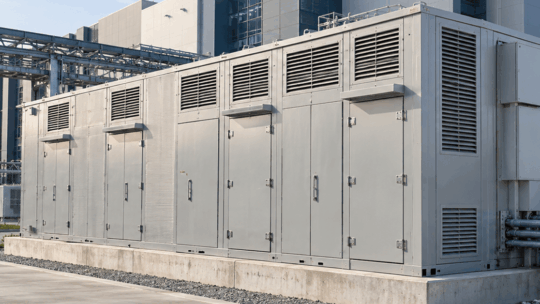
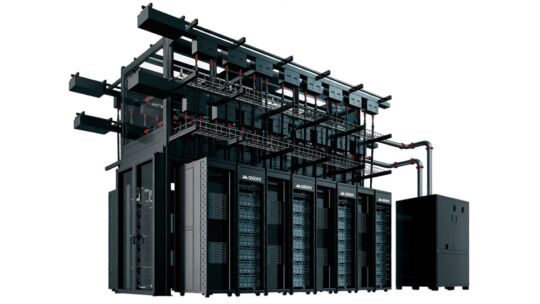
That’s why some hyperscalers are now collaborating to develop Mt. Diablo standards under the aegis of the OCP, such as a new specification for power racks that supports high voltage DC power infrastructure and 1 MW IT loads per rack — and disaggregates power, cooling, and IT to enable more of each. Instead of individual racks being largely independent systems, the coolant distribution unit (CDU), power distribution unit (PDU), and IT rack (or racks) become the collective unit enabling workloads. CDUs and PDUs are the IT rack’s “sidecars.” The new Flex AI infrastructure platform is a prime example, unifying power, cooling, and compute into pre-engineered, modular reference designs for next-generation data centers.
As data centers shift to the use of higher voltages and advanced liquid cooling technologies to support 1 MW racks, less room will be required for power conversion, power distribution, and the equipment needed for air-cooled environments.
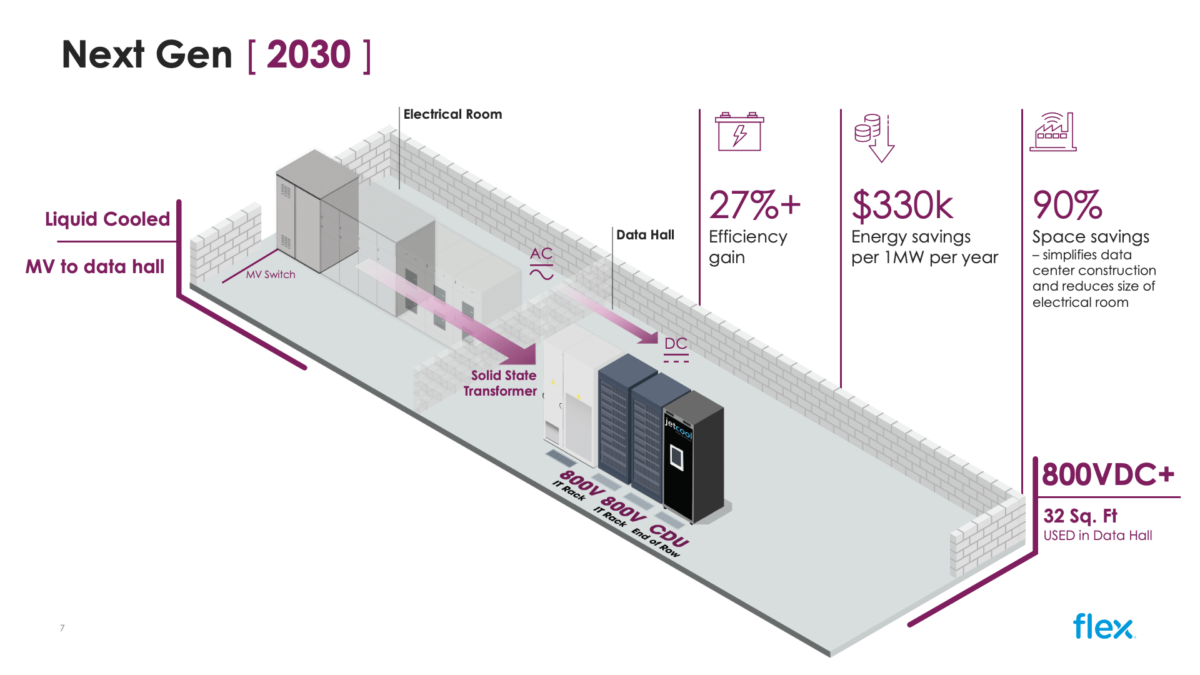
A transformation is underway that will completely revamp AI data center infrastructure within the decade. Standalone power cabinets and CDUs will free space in the IT rack for compute, which means that fewer, denser, and more performant IT racks will be required to process workloads. And instead of every rack requiring its own power and cooling system, sidecars will deliver energy and remove heat from several compute-dedicated racks simultaneously. That translates into open space ripe for further innovation.
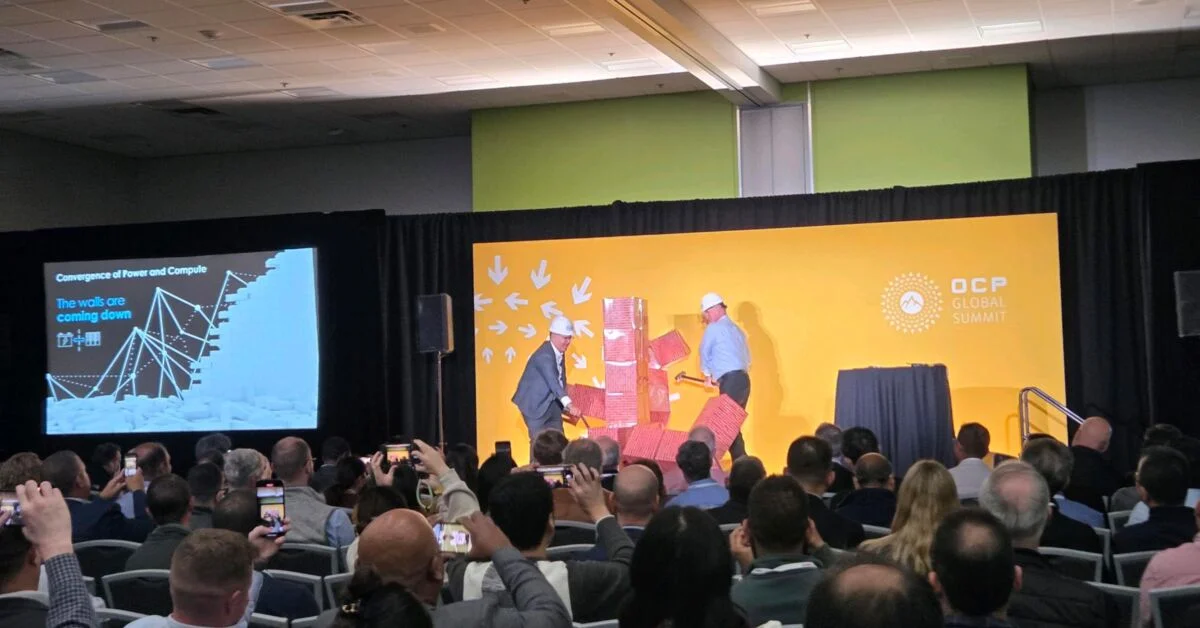
The walls that divide grey space (electrical room) from white space (data hall) are coming down as IT racks and power and cooling units become more focused, powerful, and efficient. The transition is profound. By our estimates, next-generation data centers will require 90 percent less space to produce the same outcomes they do today, and they’ll do so more efficiently.
What will hyperscalers do with their newfound square footage? Likely boost compute density in gigawatt data centers, but that remains to be seen. With more possible in a smaller footprint, they could also choose to reduce data center sizes and lower capex construction costs. Either way, the transformation is both an enabler and an opportunity, and we’re excited to collaborate on AI-era infrastructure innovation and the products that make it possible. Our bold prediction: higher efficiency, lower operating costs, and greater resilience even as the power, compute, and cooling demands placed on AI-era data centers escalate — a positive transformation, indeed.