
Blog
Matching IBC architectures to AI data center load profiles

In a recent call for collaboration, Open Compute Project (OCP) highlighted the need to rethink data center infrastructure as megawatt-scale racks enter the picture and 800 VDC power architectures move closer to becoming the de facto standard. The foundation has proposed establishing workstreams to define the core elements of next-generation data centers, beginning with power, cooling, mechanical, and telemetry protocols. I’d like to propose another: workplace safety.
The 800 VDC architecture announced by NVIDIA has some undeniable benefits. The higher voltage reduces current for a given power level, enabling lower copper usage, smaller distribution equipment, improved efficiency, and more scalable facility-level power architectures.
But moving from the 48 V power infrastructure common today to an 800 VDC power architecture isn’t just an iterative step — it is a significant leap for those working in proximity to it in the data center. We’re not just talking about electricians certified to deal with 800 VDC power safely. It takes an army to stand up and maintain all those racks and support systems, from the technicians installing servers and networking gear, to pipefitters working on liquid cooling systems, to security teams and service technicians. Everyone must have a clear understanding of the rooms they’re entering and the danger that powerful electrical currents pose, and as of yet no common safety standards or industry-wide training protocols for 800 VDC have been established.
Such standards have made today’s lower voltage 48 V data centers safer. Though high amperage in data center circuits require caution, damage caused by electrical incidents is generally confined to equipment. In the data hall where the IT equipment is housed, connections run at relatively nominal voltages, similar to those we all interface with every day. For the most part, no one’s nervous about opening an IT rack or enclosure.
The transition to 800 VDC introduces new safety considerations that must be addressed with rigor and clarity. At the facility level, 800 VDC intends to replace existing 480 VAC systems with comparable power and hazard profiles, requiring dedicated electrical fault testing, protection design, and defined work-practice controls. In contrast to the 48 V architectures commonly used inside compute racks, it represents a clear step-change in electrical hazard exposure. DC faults behave fundamentally differently from AC, most notably due to the absence of natural current zero-crossing, affecting arc-flash behavior, protection device performance, and incident energy. While National Electrical Code (NEC), IEC, and IEEE define baseline voltage classes, detailed guidance for 800 VDC data center applications is still maturing.
To close these gaps, the industry is actively conducting DC arc flash and short circuit laboratory testing, advancing calculation methodologies, and developing high-speed solid-state and hybrid DC protection devices. In parallel, operational safety practices under NFPA 70E are being adapted to ensure 800 VDC systems can be deployed and maintained with safety levels comparable to existing 480 VAC facilities, while remaining clearly distinct from lower voltage in-rack power domains.
Standards begin as tribal knowledge. Those who’ve worked with electricity understand the dangers, but codification into workplace requirements takes time. Today, the National Electrical Code® (NEC) and NFPA-70E Standard for Electrical Safety in the Workplace® published by the National Fire Protection Agency (NFPA) help employees avoid workplace injuries and fatalities due to shock, electrocution, arc flash, and arc blast. U.S. Occupational Safety and Health Administration (OSHA) regulations share a similar purpose. But neither has taken on the advent of 800 VDC in the data center yet.
Articles covering 1,000 VAC and 1,500 VDC first appeared in the NEC just two years ago, and it can take a few years for each new edition (published every three years) to get adopted. NFPA 70E first defined arc flash hazards back in 1995, but the clear mandates around PPE and broad acceptance of the standard didn’t happen until 20 years later in 2015.
From an NEC and OSHA standpoint, 600 V is a key regulatory threshold, above which systems are subject to more stringent installation, analysis, and safety requirements. As a result, most 800 VDC power distribution equipment is designed with insulation ratings that comply with that 600 V threshold.
While neither NEC nor OSHA formally defines a separate category for voltages above 600 V, PPE requirements and work practices are driven by shock and arc flash risk assessments, not voltage alone. Today, peer reviewed studies are just emerging to assess the impact of 800 VDC and the hazards associated with working around these emerging DC voltages.
We need to build awareness in the industry of what’s happening here. Transitioning to 800 VDC environments is going to cause a major shift in the way people interact with this equipment. In the future, we may not be able to let people in the data hall without the proper training and credentials. More workers across more roles must be trained in the proper way to move about the space and access the systems and infrastructure within it safely.
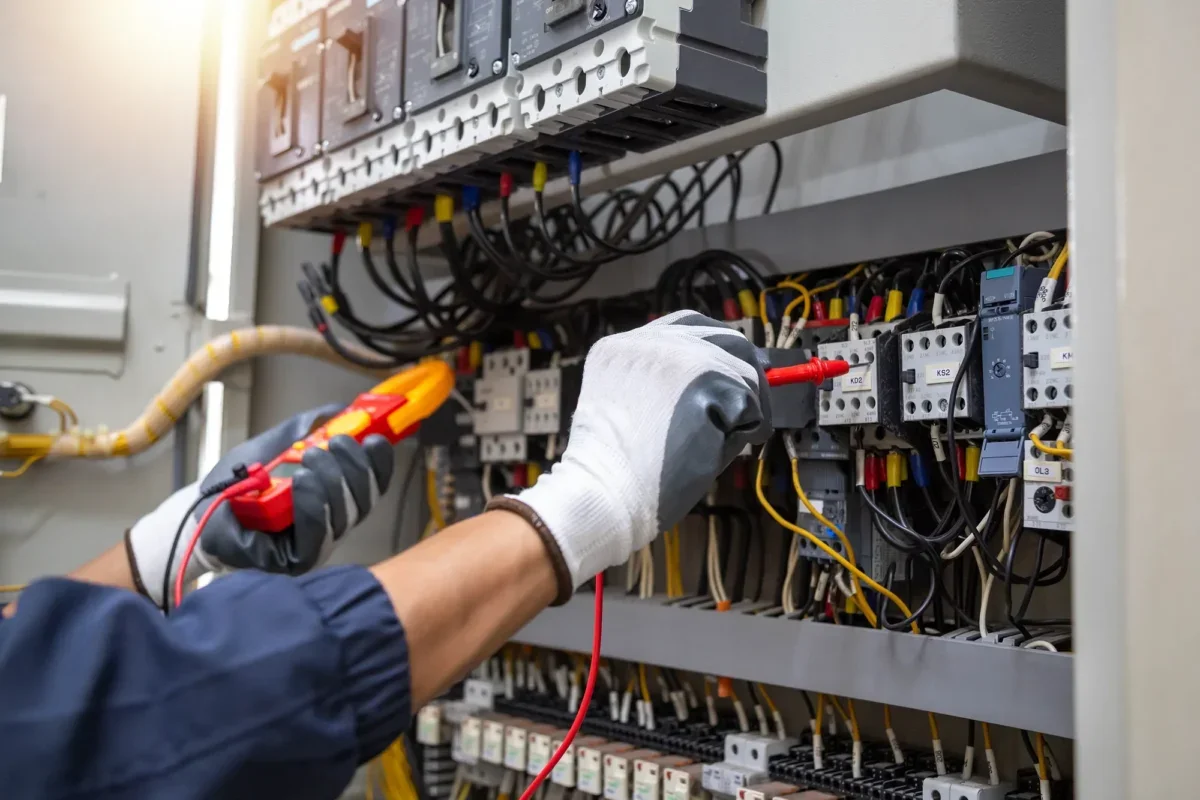
People are already working with extremely high DC voltages outside of the data center environment, and there are lessons to be learned from them. There are applications in the marine, railway and solar industries that use 1,500 VDC. But there’s one big difference between those sectors and data centers: their systems are completely shut down before any work commences. Data centers are all about uptime, and people are used to working with power, cooling, and IT equipment without much thought to their own mortality.
Hot-swapping while components remain powered on and operational isn’t a life-threatening experience, because the vast majority of equipment and workloads still run on a 48 V power architecture. “Touch-proof” design at the IT equipment layer with 800 VDC native voltage is also being actively developed.
Data centers are all about uptime, and people are used to working with power, cooling, and IT equipment without much thought to their own mortality.
The electric vehicle (EV) industry has also established safety protocols for training technicians and laypeople working with, or in proximity to, the 800 VDC architectures they’ve instituted to increase energy efficiency and enable faster charging. There is one critical difference for data center operators to consider, however, as they institute standards of their own. In a grid-fed 800 VDC system, fault currents do not decay quickly as they do in battery-based systems. Instead, they can be sustained at extremely high levels, creating severe arc flash and thermal hazards. Protection schemes, isolation devices, and grounding strategies must therefore be designed for continuous, high-energy DC rather than transient battery discharge, making safety standards and equipment selection even more critical in 800 VDC-enabled data centers.
Now, think about a hybrid data center running traditional workloads as well as AI workloads, the latter of which are driving the transition to more energy-efficient 800 VDC power architectures. In a commingled environment, where is the 800 VDC present?
Row upon row, infrastructure and equipment look pretty much the same, especially to those not intimately familiar with each brand’s nuances. And electricity is invisible, so there’s no way to find the threat by looking — but you can certainly see the aftermath when things go awry. Even with robust circuit protection, physical boundaries, grounding systems and other precautionary measures in place, care must be taken.
Even with robust circuit protection, physical boundaries, grounding systems and other precautionary measures in place, care must be taken.
Those familiar with the power architecture — primarily engineers and electricians trained in 600+ VDC protocols — will pinpoint and shut down equipment before servicing it, but they won’t be the only ones in the room. Power doesn’t get fed into racks by osmosis, and it doesn’t exist in a bubble.
The chance of misreading the threat is significant. At least three different disciplines (electrical, plumbing, IT) will be working around something that’s a lot more dangerous than it used to be. “You first” isn’t a sound safety strategy.
It’s worth noting that the electrical room and data center hall are converging as the power architecture wends its way through rows and racks in new ways to deliver higher voltage, reliable power to the 1+ megawatt racks used for AI and high-performance computing (HPC) workloads. As well, those racks themselves are constantly in flux, converging and diverging as hyperscalers reconfigure power, cooling, and IT equipment within the rack’s confined dimensions or separating them into IT and sidecar racks to boost compute capacity. Change is constant.
800 VDC demand for next-generation AI factories and GPU clusters introduces new safety, regulatory, and operational challenges. NVIDIA and power manufacturers driving the transition to 800 VDC architectures have acknowledged the safety risks and the lack of standards and workforce training and are working with regulatory and safety agencies like UL Solutions to define new safety standards, testing requirements, and education. While +/- 400 VDC safety training and PPE are available, the power architecture itself is not widely deployed yet, so awareness may be limited for it as well as 800 VDC. Isolation and emergency protocols are lacking, too.

Lack of appropriate skills and knowledge is a real concern, to the point where companies are asking experienced tradespeople to stay on beyond their intended retirement dates because the replacement math isn’t working. Complacency is an issue as well, as people become desensitized to the hazards of an environment they’re in and out of all the time.
Ideally, anyone who has the potential to come into contact with electrical equipment will be immersed in hazard identification and safety protocols like safe boundaries, proper PPE, and lockout/tag out procedures before they’re allowed on a jobsite.
While I can’t speak for other trades, I can weigh in on the power team here at Flex. We hire 20 to 30 people every week and the first thing we do is introduce them to the hazards of working around electrical equipment. While a good majority of our work is conducted in production, their first step is to understand how equipment fits together in a de-energized state and how to test and commission it. Then they move on to an energized state in a controlled environment. Depending on their skillset when they walk in the door, they have the opportunity to become a field service tech after a year or two on the job.
At that point, it’s incumbent on them to keep their knowledge up to date. Every day is different depending on the site, voltage, equipment type, etc. I still get out there with my teams in different types of facilities to keep my skills sharp, and I’ve been in industrial and systems engineering since college.
Making the leap from AC to 800 VDC power architectures introduces exponentially greater workplace hazards. With technology changing at lightning speed (pun intended), training must be in-depth and ongoing if we’re to keep electricians and those in adjacent trades and IT roles safe. That will require an uplift across the industry from a consortium such as OCP or an electrical standards body.
Worker safety cannot take a backseat to bigger-better-faster compute. Flex has state-of-the-art labs, and we’re starting to assess the hazards in the lab environment. I look forward to continuing the conversation and helping lead this important area of research which will ensure the safe adoption of 800 VDC in next-gen AI data centers.