
Blog
Automation starts with manufacturing outcomes, not robots
Advanced manufacturing technologies are driving the fundamental transformation of manufacturing to enable more integrated, efficient, and sustainable operations. As organizations work to meet sustainability commitments with fast approaching deadlines, a focused portfolio of advanced manufacturing technologies can help accelerate environmental benefits such as reduced waste, increased energy efficiency, and reduced emissions.
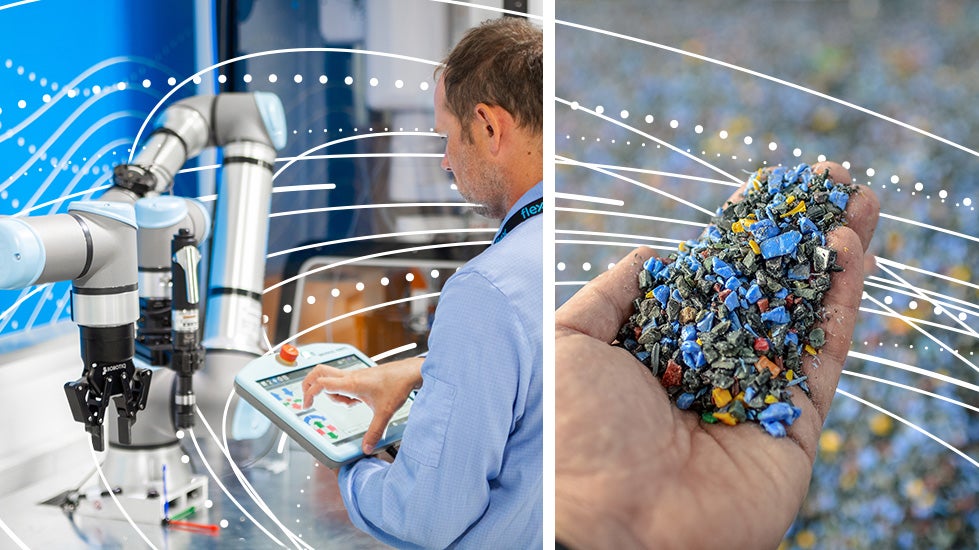
Our sites around the world leverage these technologies to not only deliver better business outcomes for our customers but also advance sustainable manufacturing and production throughout various manufacturing processes.
Recognizing the manufacturing industry’s role in tackling the growing electronic waste (e-waste) challenges, our zero-waste certified Sorocaba, Brazil site developed a circular economy ecosystem. Using advanced manufacturing technologies, Sorocaba transforms e-waste and reintroduces repurposed materials into the product lifecycle by repairing, harvesting parts and materials, and recycling. This decade-long journey earned Sorocaba its designation as the first Sustainability Lighthouse in Brazil by the World Economic Forum.
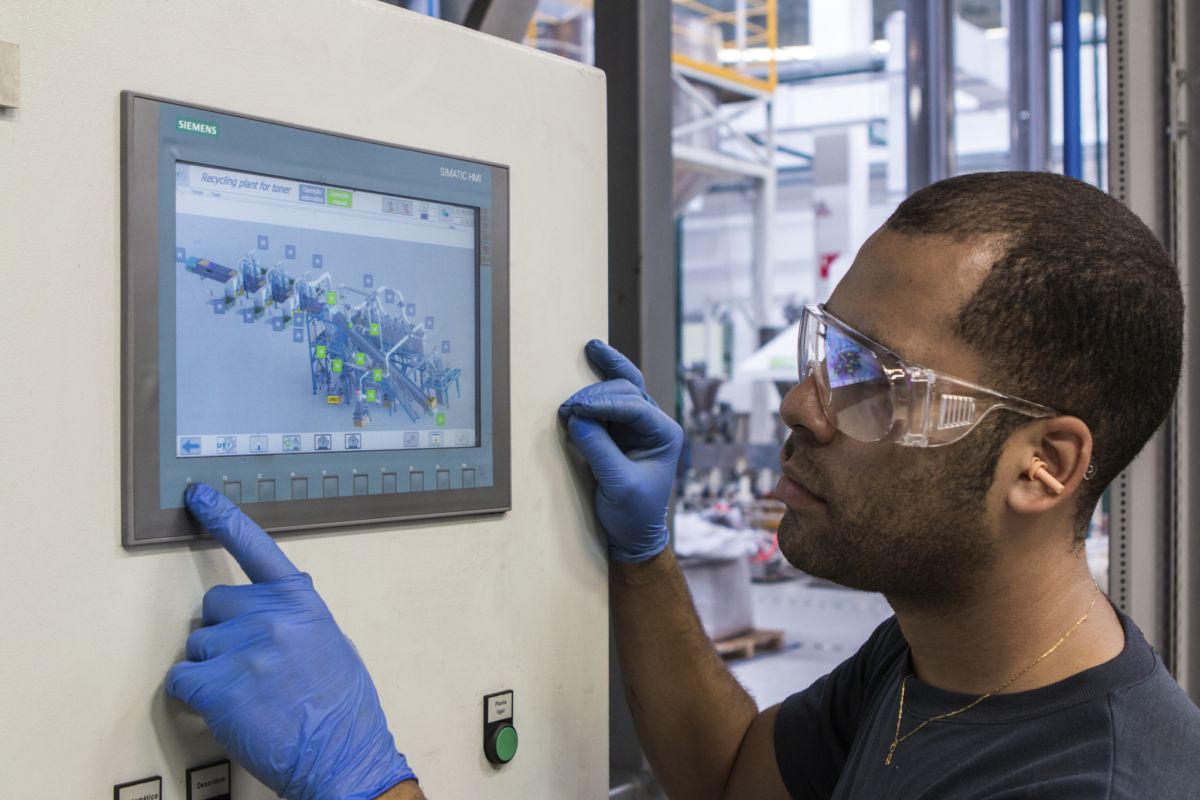
The site leverages automation in several ways to enable circular economy solutions, both for the facility and our customers in Brazil.
Sorocaba’s integrated, automated material management system identifies waste materials while ensuring sanitized recycling. This process involves digitization, including a cloud-based reverse logistics system, which supports efficient tracking and collection of waste using industrial internet of things (IIoT)-based collection bins and automated separation. This has resulted in a 94% reduction of material waste and a 38% reduction of plastic material costs. Our efforts including this performance management system also reduced the need for resources equivalent to 44,000 carbon credits.
Our Sorocaba team, and other sites around the world, optimize product design for better business and sustainability outcomes using additive manufacturing, which is inherently a more waste-efficient process and can be used for circular economy services. For example, Sorocaba uses additive, 3D printing technology to help design parts for refurbished products, further enabling circular practices.
Digitization can not only bolster sustainable manufacturing practices but also provides real-time data and insights. These tools can help reduce a site’s environmental footprint through functions such as utilities management or a CO2 dashboard that provides visibility into environmental savings for customers. By digitizing their circular economy ecosystem, the Flex Sorocaba team was able to measure sustainable impacts, including a 41% reduction in scope 1 and 2 greenhouse gas emissions as well as a 30% reduction in water consumption.
Reduction in scope 1 and 2 greenhouse gas emissions
Reduction in water consumption
A member of the World Economic Forum Global Lighthouse Network, our Althofen, Austria site’s 50-year transformation into a smart factory demonstrates how advanced manufacturing technologies can improve operational efficiency and agility while promoting positive environmental and business outcomes. Today, the site uses electricity that is generated from 100% renewable energy sources like solar, heat pumps, and hydropower and is proud to be carbon neutral.
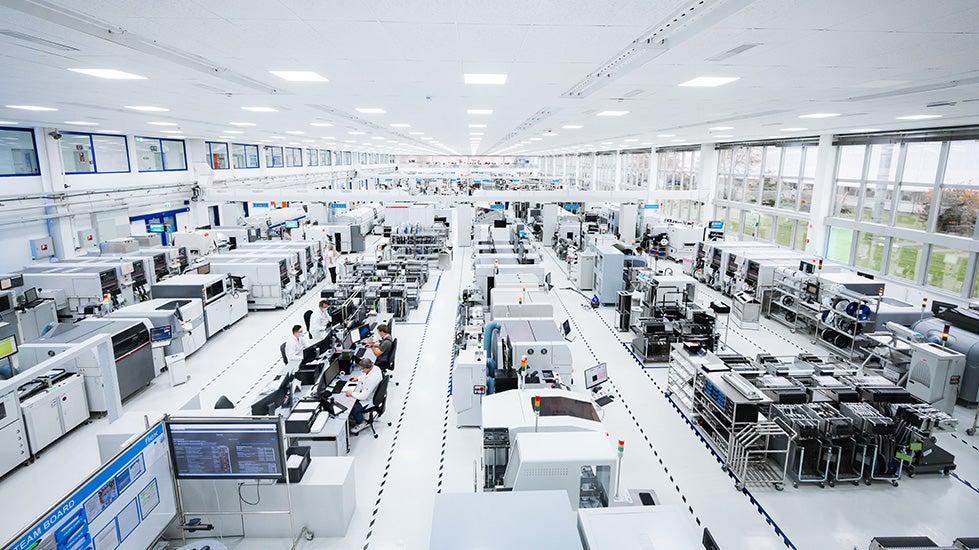
The backbone of the Althofen’s environmental progress is a specialized IT infrastructure enabled by IIoT, which provides real-time energy data monitoring and alerting of significant energy use, leakages, and more.
The improved information flow management helps the site quickly identify unnecessary energy losses and plan to efficiently avoid peak times. The digitization and automation of site data has resulted in a reduced need for travel and greater virtual collaboration. This provides further sustainability benefits, increasing efficiency while reducing emissions. Additionally, the Althofen team utilizes virtual reality to perform maintenance and inspections remotely.
The ability to capture and visualize site data in real-time also helps the team reduce waste, including water, paper, and more. For example, the advanced manufacturing technologies enable on-demand material and communicate when there’s a notable change in the process parameters to help avoid material defects and waste.
By embracing advanced manufacturing to deliver more strategic, sustainable progress, the site is helping customers on their sustainability journey. In parallel with Althofen’s sustainability progress, the site has experienced business benefits as a result of its resilient, agile, and sustainable operations.
Many of our sites in China use digitization and smart metering to quantify, analyze, and mitigate the environmental impacts of operations.
Our Fuyong, China site installed smart power meters and a digitized network to develop an energy management platform which provides real-time energy use data of manufacturing processes and historical consumption trends.
The advanced manufacturing technologies and IT infrastructure help the team tap into data for better informed decisions about future energy management solutions and practices.
The site also employs a digital waste management system, specifically to eliminate manual processing of material weight and waste. The site installed networked scales throughout the facility, which enables team members to scan a QR code that quickly registers basic information of the material, including its weight, before entering the data into a verification system. This real-time access to data is a driving force for the site’s waste reduction efforts, particularly with the goal of reaching zero waste. The system reduces paper waste while increasing efficiency and accuracy of registering data.
In addition, Flex Zhuhai B11 is strongly committed to responsible consumption and production through energy saving.
IoT technology enables real-time tracking of utilities consumption trends for water, electricity, and others are being installed. The governance of actual consumption versus forecast is automated through an advanced Facility Engineering Management System. Intelligent auto-control of key facility equipment such as a ventilation system, lighting, central air-conditioning system, and a water pump also drive further efficiencies in energy consumption.
Innovating manufacturing processes with advanced manufacturing technologies maximizes resources, reduces waste, and provides insights to further accelerate sustainability. As we progress on our sustainability journey, we’ll continue to innovate to deliver advanced and sustainable manufacturing capabilities, leveraging automation and robotics, digitization, simulation, additive manufacturing, and other innovations in advanced manufacturing.
Learn more about Flex’s advanced manufacturing technology and capabilities.