
Infographic
Built different: The rise of data center productization for AI-ready infrastructure

For decades, data center power architecture advanced on a predictable path. New processors consumed more power, but innovation proceeded at an orderly pace defined by Moore’s Law — a pace easily accommodated by commensurate progress in power distribution and efficiency. Facility design philosophy remained remarkably consistent, with the electrical and IT rooms separated both physically and as separate domains, and engineers working within their own spheres to improve equipment as technology advanced.
AI workloads have upended that approach in dramatic fashion. The arrival of power-hungry GPU clusters, 1+ MW racks, and spiky training and inference cycles has put the industry on notice. It is no longer dealing with incremental change but confronting physical limits that require a different way of thinking about power acquisition and delivery.
As chips become more powerful, AI workloads increase, data centers expand, and the industry moves toward 800 VDC architectures, several long-held assumptions deserve another look.
Facility and rack power have long been treated as separate engineering domains. One team designed substations, switchgear, uninterrupted power systems (UPS), and distribution equipment. Another designed rack power configurations, server supplies, and voltage regulation solutions. Our own business has traditionally mirrored this division, with separate focus areas for critical power (grid to facility) and embedded power (rack-level solutions). While these categories help simplify a complex market, they can also obscure the reality that power delivery is end to end.
Nonetheless, most companies in this sector are either critical power or embedded power specialists, which requires data center operators to coordinate the two and make sure there are no hiccups once grid power enters the facility. That was manageable when incremental changes ruled the day and neither domain was particularly stressed. But today’s GPU platforms consume nearly 20 times the power that CPUs did just a few years ago. Decisions made at the chip and rack level affect facility layout, cooling systems, power quality, energy requirements, and more, reverberating throughout the electrical infrastructure. Instead of treating grid infrastructure, electrical distribution, and rack-level embedded power as separate optimization problems, engineers need to evaluate the entire energy distribution path as a collaborative, multidisciplinary team. Boundaries are less meaningful than the performance of the system in its entirety.
Traditional 48–54 VDC architectures are reaching their practical limits as gigawatt-scale AI factories scale toward the adoption of 1+ MW racks. This has operators exploring 800 VDC architectures to solve problems that are difficult and expensive to address at extreme power densities. They are not inherently “better,” but they deliver distinct benefits suited to GPU-centric environments, including:
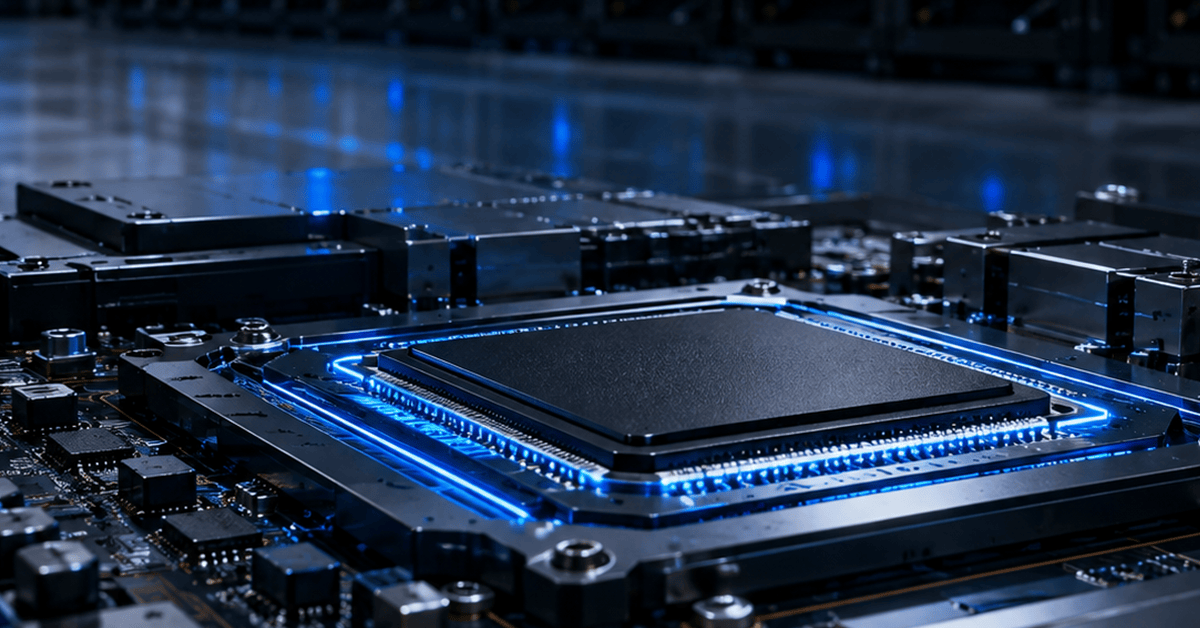
Moving to an 800 VDC infrastructure will help data center operators scale, but the immense amount of heat that high-density racks generate puts cooling on equal footing — liquid cooling, specifically. Traditional CRAC/CRAH air cooling systems are reaching their operational limits, as are traditional power systems. Liquid cooling systems are designed specifically for modern compute environments. Advanced technologies offer precise direct-to-chip cooling that can support chips over 3,000 watts TDP and, compared to traditional microchannel cold plates, can achieve three times lower thermal resistance.
As the IEA notes, cooling systems account for approximately seven to 15 percent of the total electricity consumption in highly efficient hyperscale data centers and more than 30 percent in less efficient enterprise facilities. Power density, thermal density, and system efficiency are tightly coupled and cannot be optimized in isolation. They must be evaluated and designed together as integrated systems, not standalone solutions. Power distribution determines how much electricity reaches the rack. Cooling determines how much leaves it. Collaboration between power teams must extend to cooling teams if the industry is to manage and scale the infrastructure in service of ever-more-powerful compute capabilities. Working together early in the design process enables them to think about the entire energy flow, not just the parts with which they are most familiar.
The high carrying cost of capital, possibility of delayed revenue generation, and threat of expensive GPUs sitting idle have data center operators looking for ways to streamline and accelerate construction. There are many variables outside of their control, from grid connection delays to labor shortages to the simple fact that some construction stages must precede others. But some decisions are theirs to make. Choosing standardized, prefabricated modular data center (PMDC) power, cooling, and IT systems is one of them.
Facilities that follow the traditional design/procure/build/commission process take approximately 24 to 36 months to complete due to sequential civil, MEP, fit out, and site-based integration. Incorporating modular solutions accelerates deployment up to 30 percent by enabling factory and on-site work to be done in parallel. Since they are prewired and pretested in the factory, PMDC solutions also reduce onsite testing and cabling up to 70 percent. In addition, standardized modular designs allow engineers to procure electrical and mechanical equipment with long lead times well in advance to help keep construction timelines on track. And when technology shifts, as it inevitably will, upgrading or swapping out modular solutions is easier and more cost-effective than redoing an entire data center infrastructure.
The industry supply chain is aligned to traditional data center architectures, expansion rates, and construction rhythms, but data center dynamics have changed radically and rapidly. Electrical distribution, power electronics, cooling systems, mechanical plants, busways, rack infrastructure, controls, and IT equipment have undergone significant upgrades. In some cases, they have been fundamentally redesigned. Components fit for purpose just a few years ago are obsolete in modern environments, if they are available at all.
The impact on supply chains is significant. As McKinsey notes, suppliers evolved around predictable, steady demand, not hyperscaler’s building dozens of huge AI campuses simultaneously in locations around the world. Trusted vendors may have to be jettisoned in favor of upstarts or competitors with more suitable components, equipment, or technology. New devices must be designed, tested, and ramped into production. Manufacturing capacity comes into play when demand accelerates. Limiting factors like access to raw materials, lead times, and geopolitical curveballs put resilience at a premium to keep commissioning timelines within acceptable bounds.
AI is not just creating shortages in this sector, it is increasing competition across industries for power equipment used for energy distribution, EV charging, electrification, renewable energy projects, and industrial expansion alike. The challenges posed by speed, scale, and demand require a fresh eye on supply chain resilience.
AI is making system integration more valuable than optimization in isolation. Every power conversion introduces complexity, every interface creates engineering tradeoffs, and every design decision influences efficiency, deployment speed, and long-term scalability. While the highest-performing UPS, most efficient power shelf, or best cooling technology are certainly worth noting, they are worth nothing if they do not work harmoniously within the data center environment.
From our portfolio to our manufacturing processes, Flex takes a systems perspective that reflects the convergence of utility interconnection, critical power infrastructure, embedded power conversion, modular systems, and liquid cooling solutions. We do not view them as separate product categories, but as interconnected elements of a single engineering challenge: delivering power from the grid to the chip as efficiently, cost-effectively, and predictably as possible.
As AI pushes data center infrastructure beyond traditional limits, the biggest opportunity may not be adopting a new architecture. It may be adopting a new way of thinking.
Explore how simplifying power distribution can help make AI-scale computing more efficient, scalable, and sustainable.