Video
Über die Fertigung hinaus: Integrierte Dienstleistungen über den gesamten Produktlebenszyklus hinweg

Angesichts zunehmend komplexer Lieferketten und sinkender Margen suchen zukunftsorientierte OEMs nach neuen Wachstumsstrategien jenseits traditioneller Ansätze. Produktinnovation und geografische Expansion bleiben zwar entscheidend, doch eine weniger beachtete Möglichkeit gewinnt zunehmend an strategischer Bedeutung: die Wertschöpfung über den gesamten Produktlebenszyklus hinweg.
Die Kreislaufwirtschaft wird oft als Nachhaltigkeitsinitiative dargestellt. Sie ist nicht nur eine altruistische Geste, sondern auch eine wirtschaftliche Strategie. Indem Produkte, Komponenten und Materialien länger im Kreislauf gehalten werden, … Wiederverwendung, Aufarbeitung, Reparatur und Weiterverkauf, Unternehmen erschließen dadurch neue Einnahmequellen, verringern ihre Abhängigkeit von volatilen Beschaffungsmärkten und bauen operative Widerstandsfähigkeit auf.
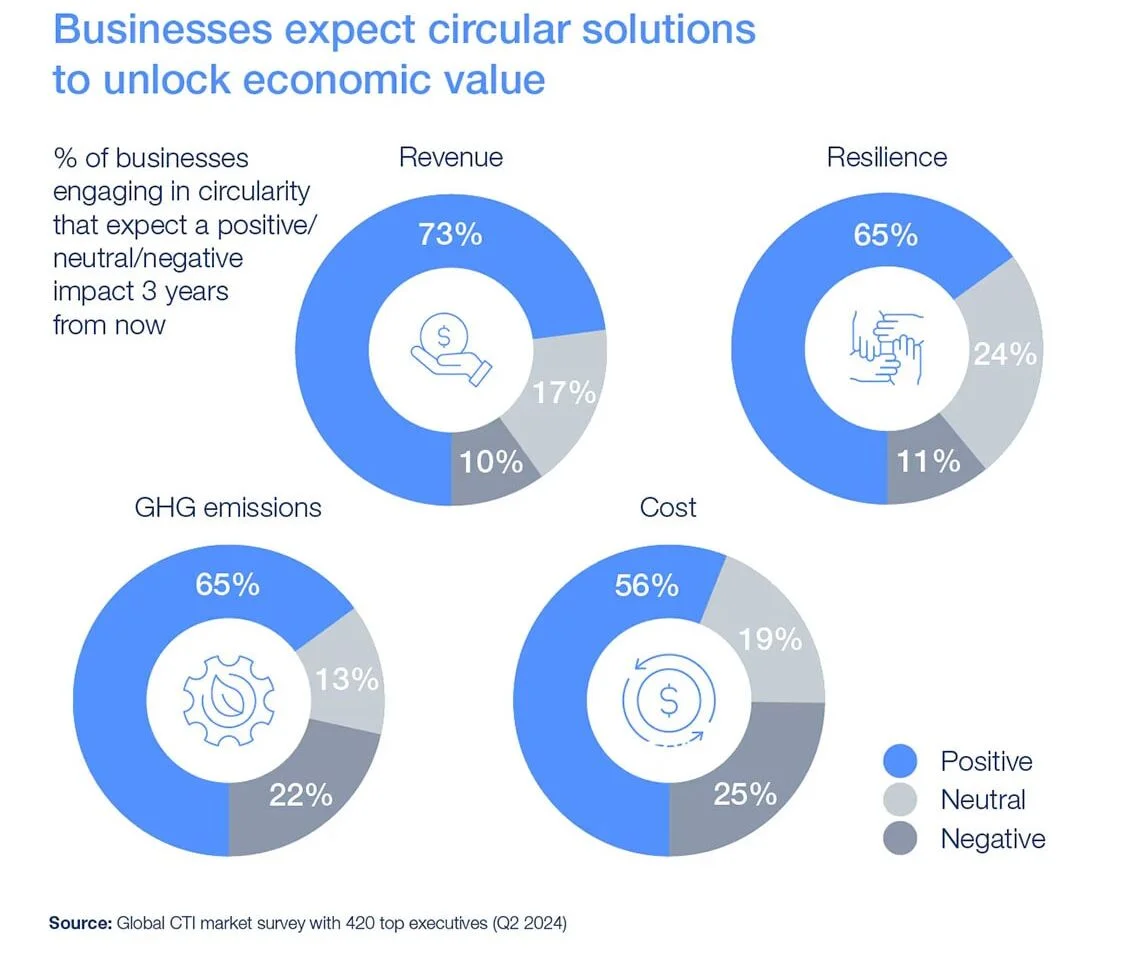
Das Potenzial ist beträchtlich. Laut [Quelle einfügen] sind nur 6,91 TP34T der in die Weltwirtschaft einfließenden Rohstoffe Sekundärrohstoffe. Globaler Bericht zur Kreislaufwirtschaftslücke 2025. Gleichzeitig sind die Unternehmensführer vom Weltwirtschaftsforum befragt Man erwartet, dass Kreislaufmodelle durch Kosteneinsparungen, Umsatzsteigerungen und eine verbesserte Lieferkettenkontinuität einen wirtschaftlichen Mehrwert schaffen. Die Erwartungen sind hoch. Die Umsetzung ist jedoch uneinheitlich.
Quelle: Weltwirtschaftsforum
Die Lücke besteht, weil die meisten globalen Systeme für ein lineares „Nehmen-Herstellen-Entsorgen“-Modell konzipiert wurden. Kreislaufwirtschaft erfordert ein grundlegend anderes Denken. Sie muss im gesamten Lebenszyklus verankert sein, angefangen beim Design über Beschaffung, Produktion und Vertrieb bis hin zur Rückgabe.
Die Reverse-Logistik wird oft als operative Notwendigkeit betrachtet – als eine nachgelagerte Funktion, die Kosten verursacht. Richtig strukturiert, wird sie jedoch zu einer strategischen Fähigkeit.
Retouren, Garantieansprüche, Lagerüberschüsse und Altgeräte bergen verwertbare Werte. Hochwertige Komponenten können wiederverwendet werden. Materialien können zurückgewonnen und der Produktion wieder zugeführt werden. Aufbereitete Produkte können auf dem Gebrauchtmarkt verkauft werden. Intelligente Wiederverkaufsplattformen kann ungenutzte Lagerbestände in Liquidität umwandeln.
Die Reverse-Logistik liefert ebenfalls wertvolle Daten. Retourenmuster decken Produktschwächen auf, Reparaturtrends zeigen Verbesserungspotenzial im Design auf und die Ergebnisse der Entsorgung geben Einblick in Schwachstellen in der Beschaffung. In Verbindung mit vorgelagerten Prozessen verbessern diese Erkenntnisse die Prognosegenauigkeit, reduzieren Überbestände und stärken die Lieferkontinuität.
Hier wandelt sich die Rückwärtslogistik von reaktiv zu proaktiv. Sie dient als Grundlage für Entscheidungen über den gesamten Lebenszyklus hinweg, anstatt lediglich die Rücksendungen zu verarbeiten.
Der Übergang von linearen zu zirkulären Modellen findet nicht erst am Ende des Lebenszyklus statt. Er beginnt bereits in den frühesten Entwicklungsstadien.
Die Berücksichtigung von Modularität, Reparierbarkeit und Demontagefähigkeit im Design erhöht den späteren Wiederverwertungswert. Strategische Beschaffungsentscheidungen bestimmen, ob Materialien effizient in die Lieferkette zurückgeführt werden können. Regionale Auftragsabwicklung und Integrationsmöglichkeiten reduzieren Transportabfälle und verbessern die Bearbeitungszeiten bei Retouren.
Wenn diese Elemente isoliert voneinander agieren, bleiben die Bemühungen um einen Kreislauf fragmentiert. Sind sie jedoch aufeinander abgestimmt, bilden sie eine kohärente Wertstrategie.
Unternehmen, die investieren in integrierte Wertrückgewinnungsfähigkeiten über den gesamten Lebenszyklus hinweg Oftmals werden unerwartete Vorteile entdeckt. Kürzere Beschaffungszyklen reduzieren das Risiko, schwer zu beschaffende Komponenten zu erhalten. Sekundäre Vertriebskanäle erweitern die Marktreichweite ohne zusätzliche Produktionskosten. Nachhaltigkeitsberichterstattung wird datengestützt statt ambitioniert.
In einem von Volatilität geprägten Markt ist Resilienz ein Wettbewerbsvorteil. Strategien der Kreislaufwirtschaft bieten Wahlmöglichkeiten: die Fähigkeit, Werte zurückzugewinnen, wiederzuverwenden und zu regenerieren, anstatt ständig Ersatzkosten zu tragen.
Kreislaufwirtschaft ist kein Randthema mehr. Regulierungsbehörden, Kunden und Investoren erwarten zunehmend messbare Fortschritte. Doch jenseits von Compliance und Außenwirkung gibt es einen noch wichtigeren Faktor: Rentabilität.
Die Rückwärtslogistik, eingebettet in eine umfassendere Lebenszyklusstrategie, wird zum Motor für inkrementelles Wachstum, Resilienz und Nachhaltigkeit. Sie stärkt die Versorgungssicherheit, verbessert die Kundenbindung durch effiziente Rückgabe- und Reparaturprozesse und schafft neue Wege zur Monetarisierung von Vermögenswerten, die andernfalls an Wert verlieren würden.
Die Frage ist nicht mehr, ob Reverse-Logistik notwendig ist, sondern ob sie strategisch gemanagt wird.
Organisationen, die Verbindungen herstellen Design, Beschaffung, Auftragsabwicklung und Rückgewinnung Die Integration in ein einheitliches Modell wandelt das, was einst als operativer Aufwand galt, in eine Quelle dauerhafter Wettbewerbsvorteile um.
Die Zukunft des Wachstums liegt möglicherweise nicht allein darin, was Unternehmen als Nächstes produzieren, sondern darin, wie effektiv sie den Wert dessen schöpfen, was sie bereits geschaffen haben.
Für Unternehmen, die Kreislaufstrategien im großen Stil umsetzen möchten, ist die Integration über den gesamten Lebenszyklus hinweg unerlässlich. Flex arbeitet mit OEMs zusammen, um Produkte effizienter zu entwickeln, herzustellen, zu liefern und zurückzugewinnen. So werden Wertschöpfungspotenziale aus Retouren, Aufarbeitung, Wiederverwendung und verantwortungsvollem Recycling erschlossen. Durch die Vernetzung dieser Kompetenzen weltweit können Unternehmen ihre Lieferkettenresilienz stärken und gleichzeitig ihre Nachhaltigkeits- und Rentabilitätsziele erreichen.