eBook
Prefabricated modular data center solutions
AI infrastructure discussions often start with technology. Faster GPUs. Higher rack densities. Liquid cooling. Advanced networking. New power architectures. Every new generation pushes the boundaries of what data centers can support while exposing the limits of building, commissioning, and deployment models designed for a different era.
In its recent report Energy and AI, the International Energy Agency (IEA) notes that “the speed of the AI revolution is increasingly contrasting with the speed of the physical, social, and economic systems that underpin it,” citing constraints across energy infrastructure, chip manufacturing, permitting, and supply chains. As data centers become larger, denser, and more standardized, competitive advantage will come from the ability to deploy integrated, repeatable systems quickly rather than engineering every site as a bespoke project.
The industry has outgrown the project-based deployment model that built the cloud.
The technologies powering AI infrastructure don’t evolve independently. Higher rack densities influence cooling requirements. Cooling architectures affect building layouts. Power distribution shapes equipment placement, serviceability, and operational resilience. Every design decision has consequences across the rest of the system.
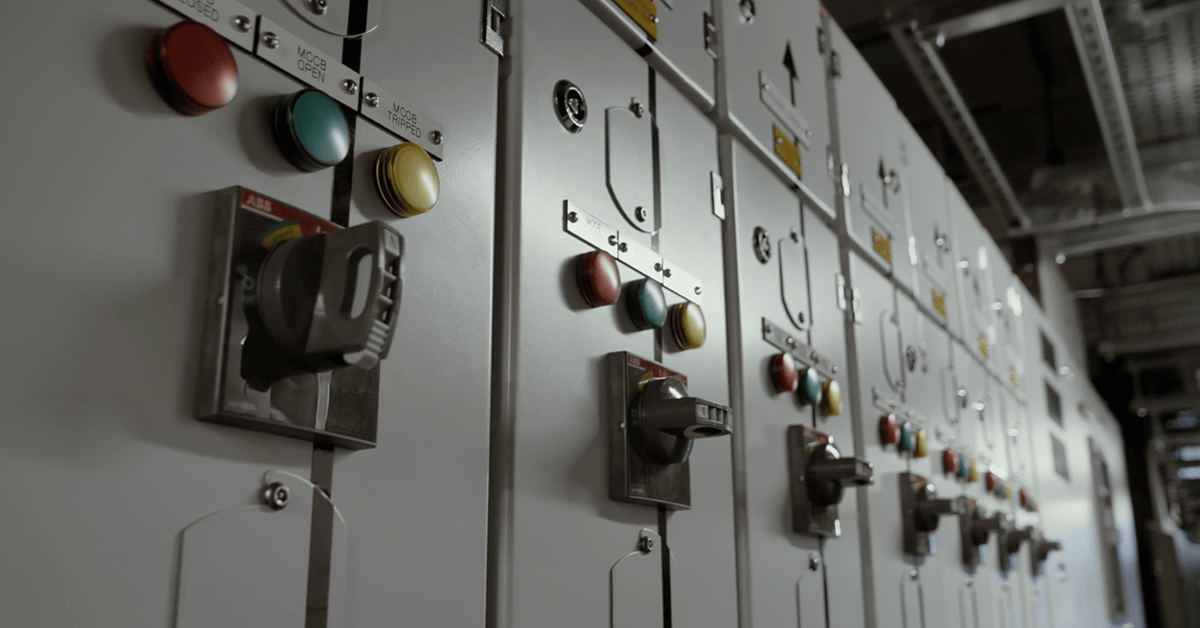
As those dependencies multiply, the engineering challenge shifts from optimizing individual systems to managing the interactions between them. Collaboration across electrical, mechanical, thermal, networking, manufacturing, and operations teams changes the design process.
Establishing a common system architecture early allows everyone to engineer products and subsystems using the same set of requirements, interfaces, and performance objectives. Integration becomes a part of the design rather than a phase that follows it.
Replacing project-by-project engineering with a common platform simplifies manufacturing, reduces commissioning effort, improves serviceability, and provides a stable foundation for repeatable deployment across multiple sites. Most importantly, it establishes an engineering baseline that can be validated once, improved continuously, and deployed consistently as AI infrastructure expands — a shift that becomes increasingly important as operators replicate proven architectures across campuses, regions, and energy markets.
Traditional construction optimizes individual projects. AI infrastructure rewards repeatable platforms, standardized products, integrated systems, and orderly execution. Manufacturing solved similar challenges decades ago. Complex products scale through validated reference designs, common interfaces, modular assemblies, factory testing, and continuous refinement, not by redesigning every product from the ground up.
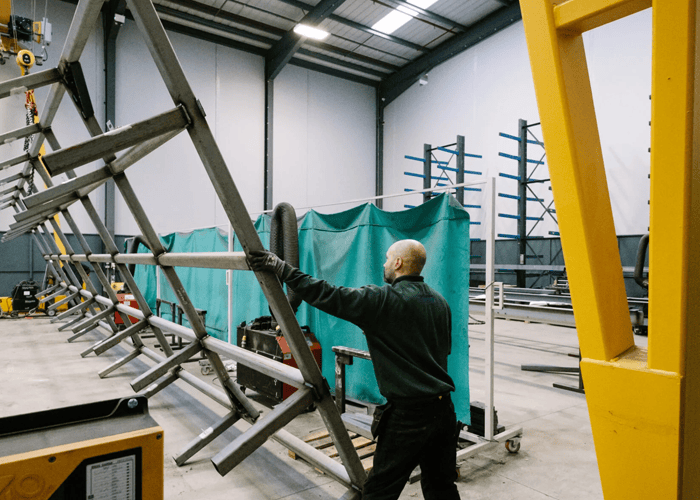
The same principle applies to data centers. Every custom design introduces engineering effort, qualification work, integration challenges, and commission risk that must be managed before the first workload commences. Multiplied across dozens of campuses and hundreds of deployments, those activities consume time and resources that could otherwise be spent expanding capacity or improving performance.
Repeatability resolves engineering complexity at the platform level, allowing every deployment to build on proven solutions rather than recreate them. It starts with disciplined engineering that carries decisions forward from one deployment to the next.
Each deployment benefits from what has already been validated rather than repeating the same work under different project names. Modularity is a design principle before it becomes a product offering.
Factory-built infrastructure is one expression of that principle, but standardized interfaces and reusable building blocks are what make platforms scalable, adaptable, and extensible. Repeatability allows organizations to scale engineering expertise alongside physical infrastructure.
These capabilities are most effective when they evolve together. Coordinated roadmaps that align technology innovation, manufacturing readiness, industry standards, and customer requirements ensure platforms advance as integrated systems. New technologies become planned product enhancements instead of one-off engineering efforts, allowing innovation to scale without sacrificing repeatability. The same discipline also aligns engineering and supply chain strategy. Standardization improves sourcing flexibility, inventory management, and lifecycle planning while reducing the disruption caused by long lead time, changing component availability, and evolving supplier ecosystems.
AI infrastructure is entering a period defined as much by execution as innovation. With $400 billion in capital investment flowing into AI infrastructure from the largest technology companies — a number expected to increase another 75 percent this year — execution has become a strategic differentiator. As architectures and technologies advance to support escalating rack density and square footage, competitive advantage will depend on how consistently these approaches can be manufactured, integrated, deployed, and operated across dozens of sites with the speed, quality, and predictability AI demands.