
Product
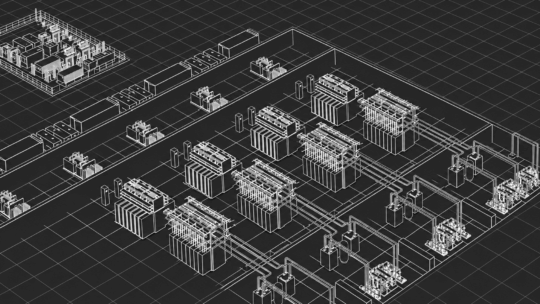
System-level modular infrastructure reference design for NVIDIA Vera Rubin NVL72
Flex Power Modules’ solutions for servers, storage, hyperscale, and cloud computing are optimized for high efficiency, power density, and quality at a low cost of implementation.
Driven by the ever-increasing demand for power, many cloud-based data centers are transitioning from 12V to 48V as the preferred voltage level for rack DC voltage distribution. When large numbers of electronic equipment are tightly packed into a fixed space, power supply efficiency is highly prioritized. However, even the most efficient systems unavoidably produce heat, simultaneously increasing the importance of power density and thermal management.

At Flex Power Modules, our thermal management approach emphasizes the use of top-side heat removal. We redesigned our eighth and quarter brick modules, placing thermal conduction paths from heat dissipating components to the top baseplate for direct heat removal.
The rack-level 48V architecture supports the potential elimination of input-to-output isolation in the first stage of DC/DC conversion, while some applications support an unregulated intermediate bus voltage:
In traditional two-stage power conversion, an emerging trend for the second stage is to use two-phase power modules as building blocks. Multiple two-phase modules are then paralleled to meet total current requirements. These are then combined with an external multi-phase controller that provides final phase-count control and other communication or performance requirements.