Blog
Das vertikal integrierte E-Haus
Da die Nachfrage nach Rechenzentren, insbesondere solchen, die sich auf die Rechenleistung von KI spezialisiert haben, steigt, müssen Stromversorgungssysteme nicht nur weiterhin eine verbesserte Effizienz, sondern auch eine höhere Leistungsdichte bieten.
Die Stromversorgungsarchitekturen von Rechenzentren haben sich weiterentwickelt, um dem steigenden Bedarf und den sich ändernden Lastanforderungen gerecht zu werden. Früher hatte jedes Rack seinen eigenen AC/DC-Wandler, was zu aufwendigen und kostspieligen Verkabelungen führte. Heute vereinfacht ein Zwischenbuswandler (IBC) den Prozess, indem er als zentraler AC/DC-Wandler ein ganzes Rack versorgt und Gleichstrom in der Regel mit sicheren Spannungen von 48 V oder 54 V liefert, um den ohmschen Widerstand (I<sub>on</sub>) zu minimieren.2R) Verluste und Aufrechterhaltung akzeptabler Stromniveaus.
Innerhalb jedes Blades wandelt ein IBC die 48-V-Eingangsspannung in eine Zwischenspannung (häufig 12 V) um, die dann über Point-of-Load-Wandler (PoL) oder neuerdings Spannungsreglermodule (VRM) die präzisen Spannungen erzeugt, die für verschiedene Platinen und Chips bei den oft geforderten hohen Strömen benötigt werden. Traditionell mussten IBCs mit dem in Telekommunikationsanwendungen verwendeten Spannungsbereich von 36 V bis 75 V kompatibel sein. Da in Rechenzentren jedoch keine Batterie-Backups mehr verwendet werden (sondern üblicherweise unterbrechungsfreie Stromversorgungen (USV) zum Einsatz kommen), kann die Eingangsspannung des IBC auf 40 V bis 60 V oder einen noch engeren Bereich optimiert werden.
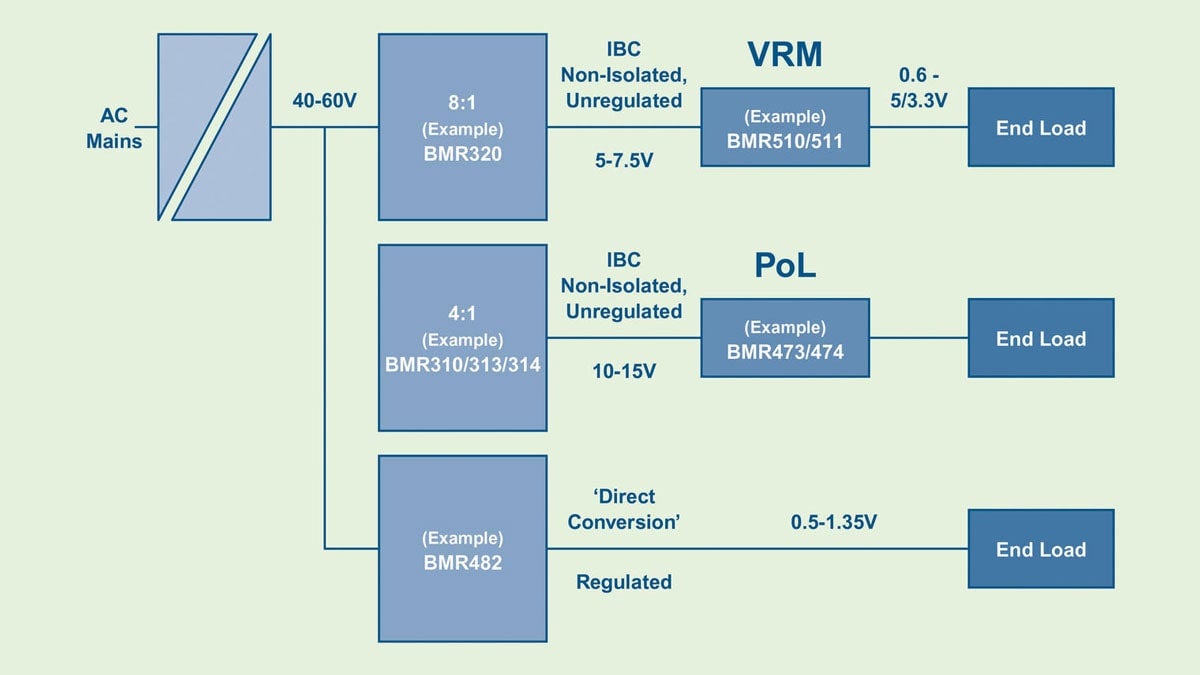
Die Einführung eines IBC-basierten Systems bietet viele Vorteile, darunter höhere Effizienz, geringere Verkabelungskosten und bessere Leistungsdichte. Durch die Einführung einer zusätzlichen Umwandlungsstufe wird jedoch der Effizienzvorteil am wichtigsten.
Flex Power Modules hat verschiedene IBC-Typen entwickelt, darunter ungeregelte, geregelte und die innovative Hybrid Regulated Ratio (HRR)-Option. Designer müssen Aspekte wie Kosten, Effizienz und spezifische Systemanforderungen bewerten, um den am besten geeigneten Ansatz auszuwählen.
Ungeregelte IBCs (Integrated Biotransformators) haben ein festes Umwandlungsverhältnis, beispielsweise 4:1 (d. h. eine Eingangsspannung von 48 V wird in eine Ausgangsspannung von 12 V umgewandelt). Dadurch erreichen sie höchste Effizienz, niedrigste Kosten und kleinste Abmessungen. Ihre Ausgangsspannung ist jedoch direkt proportional zur Eingangsspannung, weshalb der PoL-Wandler potenziell große Spannungsschwankungen ausgleichen können muss.
Geregelte IBCs verwenden dagegen eine Rückkopplungs- oder Vorwärtsschleife, um ihre Ausgangsspannung innerhalb viel engerer Toleranzen zu steuern. Dies bedeutet jedoch, dass der IBC einen geringeren Wirkungsgrad hat als seine unregulierte Alternative. Dennoch kann die Einhaltung eines kleinen Ausgangsspannungsbereichs den Wirkungsgrad des PoL-Konverters erheblich verbessern.
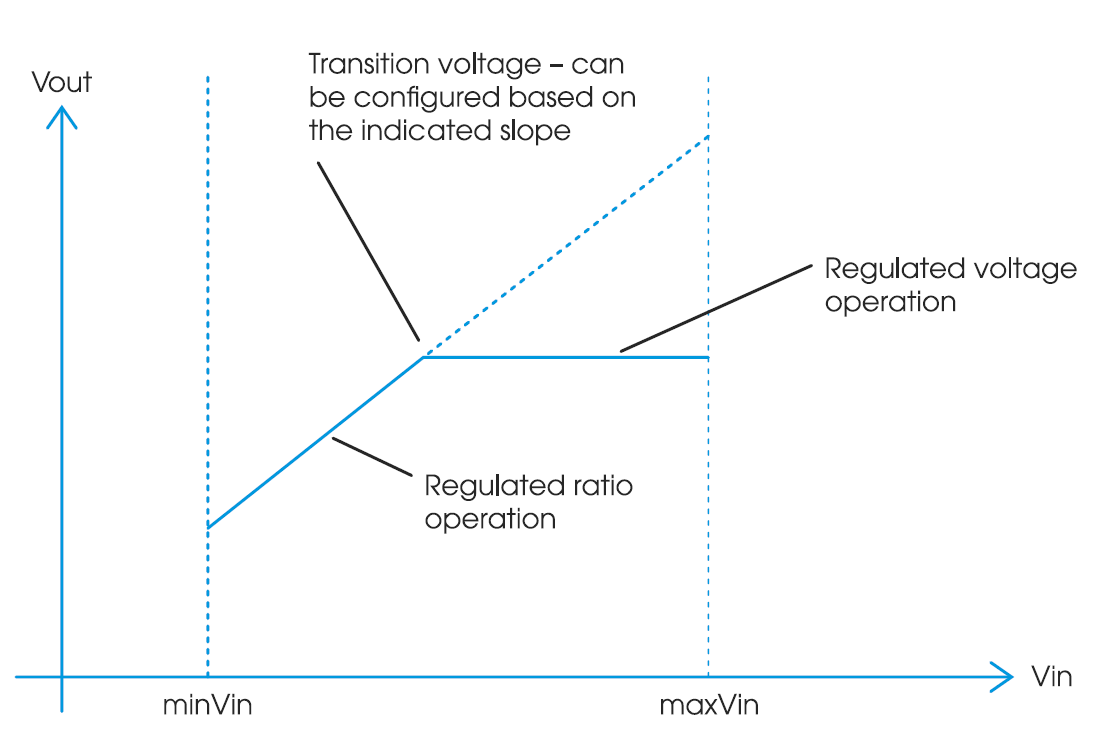
Das HRR-Modell vereint beide Ansätze und bietet eine proportionale Regelung bis zu einer festgelegten Eingangsspannung, bevor auf die volle Regelung umgeschaltet wird. Dadurch werden die besten Eigenschaften beider Systeme für viele Anwendungen kombiniert.
Innerhalb dieser unterschiedlichen Ansätze gibt es zahlreiche technische Herausforderungen, die bewältigt werden müssen, um ein effizientes und zuverlässiges IBC-Design zu erreichen.
Beim Einschalten können kurzzeitige Stromspitzen auftreten, die Bauteile beschädigen oder Überstromschutzmechanismen auslösen können. Dies lässt sich durch Anpassen der Schaltfrequenz oder durch Verwendung größerer Ausgangsinduktivitäten verringern.
Dieses Verfahren steigert die Effizienz durch den Einsatz von MOSFETs anstelle von Dioden zur Gleichrichtung, da diese geringere Spannungsabfälle aufweisen. Allerdings erhöht es die Komplexität, insbesondere hinsichtlich der Ansteuerzeiten des Umrichters.
MOSFETs können Strom in beide Richtungen leiten, was bei abrupten Abschaltungen Risiken birgt. Geeignete Steuerungsstrategien, einschließlich der rechtzeitigen Deaktivierung der MOSFETs, sind daher entscheidend, um unerwünschte Rückströme zu verhindern.
Viele Ingenieure bevorzugen es, komplette IBC-Module von Herstellern zu beziehen, die so konzipiert sind, dass sie diesen Herausforderungen gerecht werden und gleichzeitig Leistung und Effizienz maximieren.
Flex Power Modules hat nicht isolierte, unregulierte IBC-Lösungen eingeführt, wie zum Beispiel die BMR313, BMR314und Produkte für ein BMR320.
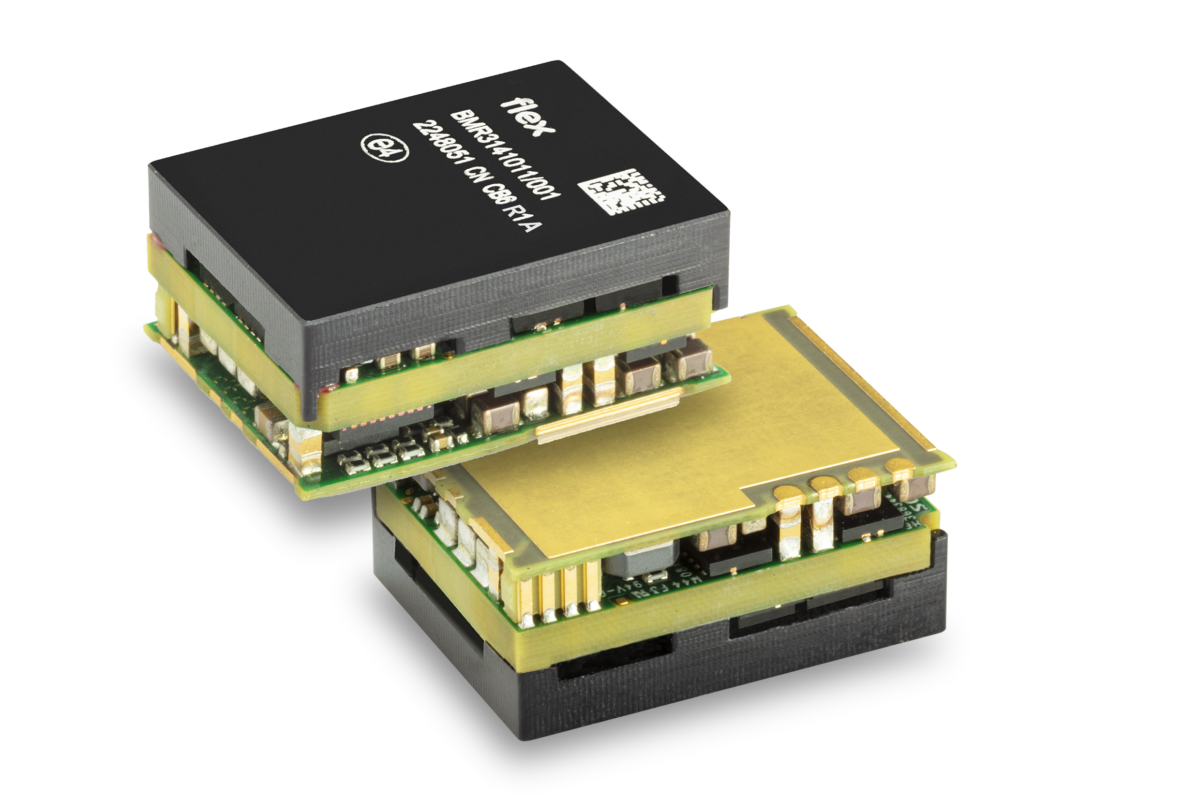
Das Modell BMR313 eignet sich hervorragend für beengte Platzverhältnisse und bietet eine Spitzenleistung von 3 kW in kompakter Bauform (23,4 x 17,8 x 7,65 mm). Es erreicht eine bemerkenswerte Leistungsdichte von 908 W/cm³ bei einem Eingangs-/Ausgangsverhältnis von 4:1. Der BMR313 nutzt die Vorteile des FD6000, dem digitalen Zwischenbus-Controller der neuesten Generation von Onsemi. Bei einer Eingangsspannung von 54 V erreicht das Modul einen Wirkungsgrad von bis zu 97,21 TP34T bei einer Last von 501 TP34T (40 A).
Ein weiteres Beispiel für einen nicht isolierten, ungeregelten IBC mit einem Verhältnis von 4:1 ist der BMR314, der bis zu 1,5 kW Spitzenleistung liefert. Wie der BMR313 verwendet der BMR314 einen LGA-Footprint und eine Pinbelegung nach Industriestandard für die Versorgungssicherheit und Second Sourcing.
Darüber hinaus eignet sich der BMR320 für Eingangsspannungen von 40 V bis 60 V und nutzt ein festes Übersetzungsverhältnis von 8:1, wodurch die Ausgangsspannung zwischen 5 V und 7,5 V liegt. Dies macht ihn ideal für Anwendungen, die eine niedrigere Zwischenkreisspannung erfordern, was in Verbindung mit nachgeschalteten PoL-Wandlern, VRMs oder integrierten Leistungsstufen wie dem BMR510 und anderen zur Optimierung der Gesamtsystemeffizienz beitragen kann.
Jedes Modul ist mit einer PMBus-Schnittstelle ausgestattet, die eine einfache Überwachung, Konfiguration und Steuerung ermöglicht und sich nahtlos in bestehende Systeme integriert. Flex Power's Designer Software zur Unterstützung eines anspruchsvollen Energiemanagementsystems.
Unregulierte IBCs erfreuen sich in Rechenzentrumsanwendungen zunehmender Beliebtheit, da sie im Vergleich zu regulierten Typen eine höhere Effizienz und Kosteneffektivität aufweisen.
Neben den bereits erwähnten Eingangs-/Ausgangsverhältnissen von 4:1 und 8:1 werden weitere Verhältnisse nachgefragt, die es Systementwicklern ermöglichen, die Gesamteffizienz ihrer Systeme zu optimieren. Beispiele hierfür sind 5:1, 6:1 und sogar 10:1. Flex Power Modules reagiert darauf mit neuen Produktentwicklungen, die modernste Topologien und Komponenten sowie innovative Wärmemanagementtechniken nutzen, um höchste Leistungsdichten zu erzielen.
Da die Nachfrage nach robusteren und effizienteren Stromversorgungen weiter wächst – angetrieben durch Fortschritte in der Prozessortechnologie, die auf KI-Anwendungen ausgerichtet sind – werden sich die Ingenieure für Stromversorgungsdesign weiterhin auf das Wärmemanagement bei hohen Leistungsdichten konzentrieren, da sie versuchen, die Kühlkosten niedrig zu halten.
Zum Glück ist Flex Power Modules weiterhin ein weltweit führender Anbieter von IBC-Leistungsmodulen und entwickelt kontinuierlich innovative, zuverlässige und effiziente Stromversorgungslösungen, um diesen sich wandelnden Anforderungen gerecht zu werden.