Blog
Automation starts with manufacturing outcomes, not robots

As AI, grid modernization, and electrification drive unprecedented demand for electrical infrastructure, behind-the-meter power is emerging as one strategy to overcome utility interconnection timelines and increase energy resilience. While much of the conversation around behind-the-meter power has focused on on-site generation, there’s another question that deserves equal attention: How do original equipment manufacturers (OEMs) bring the products that enable behind-the-meter power to market quickly and reliably at scale?
Whether powered by natural gas generators, battery energy storage systems (BESS), fuel cells, or hybrid architectures, behind-the-meter deployments are creating additional demand for standard and next-generation power products, from control electronics and power conversion equipment to turbines, backup power systems, power distribution equipment, and electrical assemblies. The right solution depends on the customer’s technical requirements, business objectives, and construction horizon. But every solution shares one common denominator: products that must be engineered for manufacturability, sourced amid constrained supply chains, and ramped quickly as demand grows.
Behind-the-meter deployments introduce new product requirements and more sophisticated electrical architectures. They also rely on many of the same long-lead-time electrical components that support utility-connected infrastructure, from transformers and switchgear to protection systems, medium- and low-voltage power distribution equipment, controls, and communication hardware. For energy infrastructure OEMs, the challenge extends beyond product innovation to turning new designs into qualified manufacturing programs that can meet demand across markets.

One assumption about behind-the-meter power is that it’s simply a matter of adding generation to an existing electrical system. While that increases available capacity, it can also change how power is acquired, managed, and distributed across the site — and, in turn, what is required of the equipment that supports it. These requirements are evolving quickly. According to the International Energy Agency (IEA), the power density of AI servers increased elevenfold between 2020 and 2025 and could increase another fourfold by 2027, a pace of change that will place new demands on the power electronics, distribution, controls, and other equipment supporting these facilities.
As power architecture becomes more distributed, OEMs may need equipment capable of supporting advanced controls, expanded communications, new electrical assemblies, and a wider range of operating conditions. Those requirements have implications beyond engineering, influencing sourcing, manufacturing processes, production testing, serviceability, and lifecycle management. Understanding these downstream implications while product requirements are still being defined can help OEMs move more effectively from concept to production-ready equipment.
Another common misconception is that behind-the-meter deployments avoid the bottlenecks slowing utility interconnection. If utility interconnection is delayed, the thinking goes, on-site generation provides a faster path to energization.
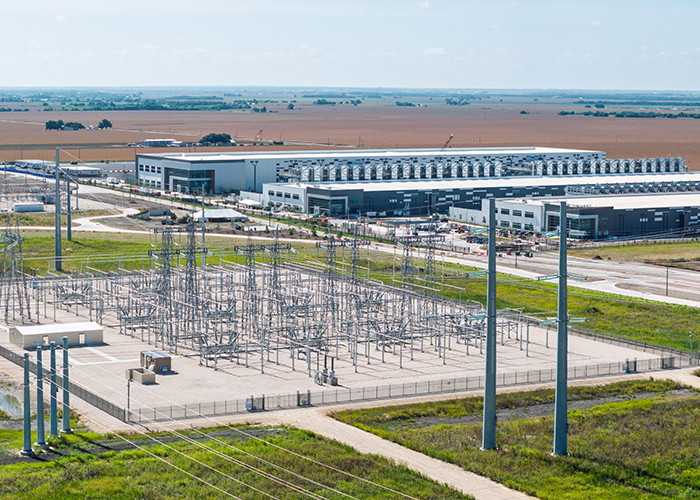
While on-site generation may reduce dependency on utility interconnection schedules, it does not make vital equipment available any faster. Projects still depend on many of the same long-lead-time building blocks, including transformers, switchgear, protection systems, medium- and low-voltage equipment, controls, and communication systems. In some cases, behind-the-meter deployments require additional equipment to integrate multiple power sources safely and reliably.
Those constraints are already visible on both sides of the Atlantic. The U.S. Department of Energy reports that demand for distribution transformers has increased 41 percent since 2019, while order lead times grew from three to six months in 2019 to one to two years or longer in 2024. Lead times for large transformers used for substations and generators have extended to as much as three to four years.
Europe faces similar pressures. ENTSO-E estimates that by 2030 the region will need more than 150,000 kilometers of additional transmission lines, along with roughly 14,000 circuit breakers, 4,800 gas-insulated switchgear units, and 1,900 transformers. European transmission system operators are already reporting widespread supply chain bottlenecks, including limited manufacturing capacity and rising equipment costs.
Energy infrastructure OEMs have the greatest opportunity to mitigate constraints during design, when choices around component selection, qualified alternatives, and product variants can prevent costly production challenges later. Qualifying variants around constrained components, for example, can provide options as availability changes without forcing a ground-up redesign. Common components and standardized interfaces across variants can further reduce sourcing complexity while accommodating different customer or regional needs.
Sourcing decisions can also carry regulatory and financial implications. Trade compliance requirements, country-of-origin considerations, and evolving rules governing foreign entities can influence component and supplier choices, while incentives such as the U.S. Section 45X advanced manufacturing production credit may affect where eligible components are produced. Accounting for these factors during product and supply chain design can help OEMs preserve options as regulations, incentives, and market conditions change. Supply chain resilience starts with design, not procurement.
Behind-the-meter applications vary widely. Data centers, industrial facilities, utility installations, critical infrastructure projects, and commercial manufacturing sites may call for different combinations of power generation, storage, conversion, protection, and distribution technologies. That creates a difficult balancing act for energy infrastructure OEMs.
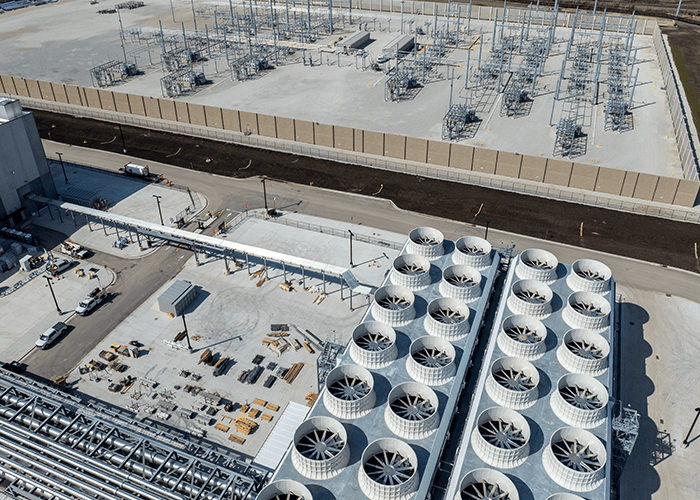
Customers expect equipment tailored to their applications, but highly customized designs increase engineering effort, add sourcing complexity, and make production more difficult.
Configurable platforms offer another path. A common underlying design with defined options can address multiple customer needs without requiring OEMs to reinvent the product for each opportunity. The approach can streamline production, simplify product lifecycle management, and provide a foundation for products to evolve as market needs change.
As behind-the-meter applications diversify, the goal is to standardize what you can and customize what you must, preserving customer choice without allowing variation to undermine manufacturing efficiency.
Bringing a technically successful product to market is only part of the challenge. How readily that design transitions into production depends heavily on decisions made during development. Design for excellence (DfX) methodologies help OEMs address production requirements early in development. Design for manufacturing (DfM) and design for test (DfT) are particularly important for ensuring that products can be assembled, tested, and scaled efficiently, reducing the risk of costly design changes and delays during ramp.
Applying DfM principles alongside product performance criteria allows OEMs to consider how component selection, enclosure design, wiring schemes, thermal management, PCB layouts, cable routing, and fastening methods affect assembly, quality, throughput, and speed to volume.

DfT brings similar discipline to production testing. Insufficient test points, limited diagnostic access, or unstable test equipment can complicate fault isolation, reduce yields, and constrain throughput. Addressing testability during product development allows OEMs to establish appropriate test coverage, incorporate access points, and develop reliable, repeatable test methods. The objective is to detect defects effectively, isolate failures to specific components or assemblies quickly, and sustain test performance as production volumes increase.
Together, DfM and DfT help turn engineering designs into products that can be built, tested, and verified consistently at scale.
Finding and resolving issues after equipment reaches the field is costly. On-site environments introduce variables that are hard to control, from labor availability and site readiness to coordination across equipment and schedules. The more work that can be completed before shipment, the fewer unknowns remain at deployment.
OEMs can reduce that exposure by moving assembly, testing, validation, and appropriate pre-commissioning activities upstream. Instead of treating testing as a final quality gate, production and functional test strategies can be developed to verify wiring, controls, communications, power electronics, and other functions under controlled factory conditions. Where appropriate, more complete assemblies can be built and validated under simulated operating conditions before shipment so potential issues are identified and resolved before they reach the site, reducing the work and risk that remain for on-site commissioning.
For behind-the-meter applications, where time to power is a critical measure of success, this broadens the role of manufacturing from building the product to helping establish deployment readiness. Consistent test processes and documented results can reduce troubleshooting and rework after delivery while increasing confidence as production expands across sites or regions.
Manufacturing products in one location and shipping them around the world can introduce logistics complexity, longer supply lines, and greater exposure to disruption. Producing closer to end markets improves responsiveness, simplifies logistics, and gives OEMs additional options when conditions change in a particular geography.
Regionalization, however, requires more than duplicating a production line. End customers expect the same product performance, quality, traceability, and delivery experience regardless of where equipment is manufactured. They will evaluate not only whether an OEM can meet today’s requirements, but whether it has the manufacturing reach and operational discipline to keep pace as their needs evolve. OEMs need a scaling partner capable of transferring processes, tooling, testing protocols, quality standards, work instructions, supplier strategies, and training across locations while maintaining consistent execution and quality. The decisions discussed throughout this article — from common platforms and qualified variants to DfM and standardized testing — create the foundation for that transfer.
The goal isn’t simply more manufacturing capacity. It is a manufacturing model that can be replicated where customers need it while maintaining consistent quality and performance. For OEMs expanding in the behind-the-meter market, that capability can shorten lead times, improve responsiveness, and support growth across regions.
Behind-the-meter power may offer customers new options for addressing energy availability, resilience, and time to power. But generating electricity on site doesn’t eliminate the manufacturing challenges required to put that power to work.
For OEMs, the opportunity is to address those challenges as part of product development rather than after it. Anticipate how new power architectures will affect equipment requirements. Design around supply chain and regulatory constraints. Create configurable platforms and engineer for efficient production. Resolve more issues before products reach the field and establish manufacturing models that can follow demand.
As the market expands, the differentiator will be the ability to turn innovation into products that can be built reliably, delivered quickly, and manufactured consistently across regions to support end customer growth.