Blog
Regulatory resilience is the next supply chain imperative
The complex ecosystem of global trade has reached an inflection point.
Supply chains are being reshaped by powerful forces, including the rapid rise of AI, geopolitical uncertainty, electrification, sustainability requirements, and evolving customer expectations. Together, these trends are fundamentally changing how companies design products, source materials, manufacture at scale, and collaborate across global ecosystems.
A recent McKinsey Global Institute report reinforces this reality, noting that disruptions are no longer exceptional events but a defining feature of our modern world:
Shifts in trade point to some durable trends and a need for resilience to shocks. AI, emerging market growth, and China’s evolving manufacturing focus are not flashes in the pan, nor is the growing role of geopolitics in reshaping trade. Companies need long-term thinking coupled with agility.
At Flex, we’ve seen this shift coming.
For more than 50 years, we’ve helped some of the world’s leading brands navigate supply chain challenges ranging from component shortages and tariffs to geopolitical conflicts and global disruptions like COVID-19. But today’s environment is different. Demand is accelerating across transformative industries at the same time products, networks, and supply chains are becoming more complex.
AI is fueling investment across data centers, advanced networking, semiconductors, and energy infrastructure. Healthcare continues to transform as an aging population and rise in chronic diseases drive demand for connected medical devices and drug delivery systems. Robotics and warehouse automation are accelerating in response to regionalization and labor shortages, while the automotive industry is evolving through electrification and the shift to software-defined vehicles.
In this environment, supply chain resilience can no longer be built through incremental improvements alone. Success depends on stronger ecosystems, deeper collaboration, and the ability to anticipate change before it happens.

When disruption occurs, organizations often focus on accelerating execution. But speed only creates value when teams can make decisions quickly and confidently.
Many delays stem not from physical constraints but from information gaps, disconnected systems, and limited visibility across networks. Organizations that can rapidly assess impacts, evaluate alternatives, and align stakeholders gain a significant advantage.
That’s why digital visibility has become a core component of supply chain resilience.
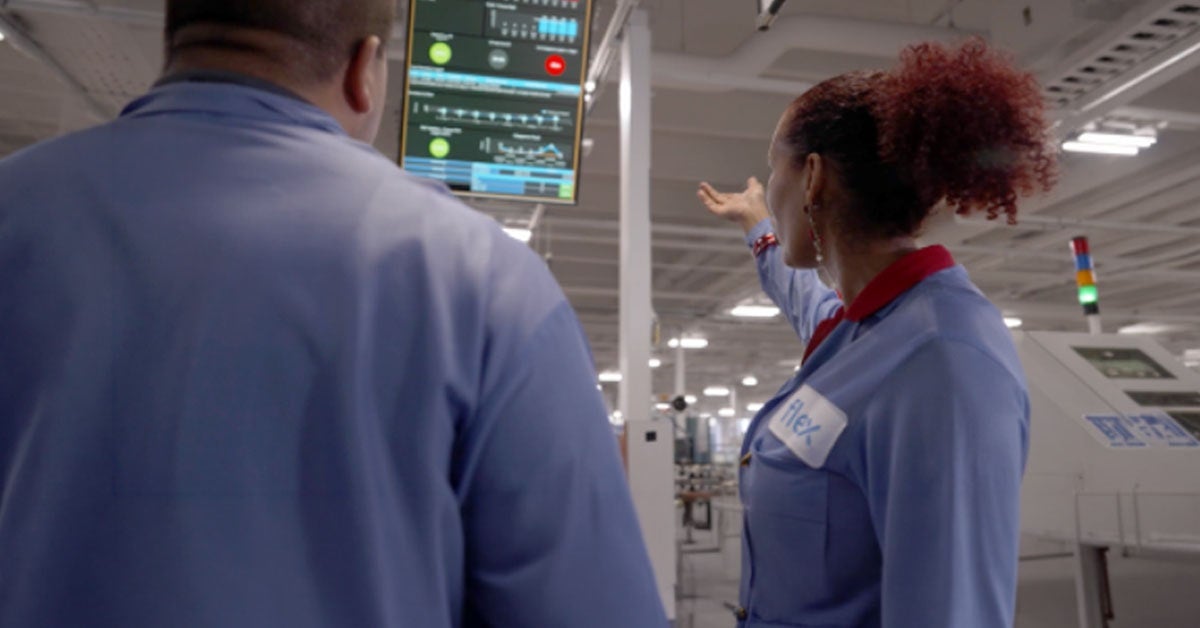
Through digital solutions like our Flex Pulse platform, organizations can model scenarios, evaluate network tradeoffs, and gain insights that support faster, more informed decisions. Instead of reacting after disruptions occur, they can identify risks earlier, optimize sourcing strategies, and improve operational agility.
But visibility alone is not enough. The ability to translate market signals into action across sourcing, manufacturing, inventory, and logistics has become a critical differentiator. Organizations that can connect data, expertise, and execution are better positioned to protect customer commitments and maintain continuity as market conditions change.
As conditions change faster than ever, competitive advantage belongs to companies that remove friction from decision-making and act with confidence.
As growth accelerates across AI infrastructure, healthcare, industrial, and automotive markets, companies face a critical challenge: how to scale without adding complexity faster than they can manage it.
The answer lies in balancing standardization with flexibility.
Standardized processes and operating models create the foundation for efficiency and scale. Long-term success, however, requires the agility to adapt as technologies evolve, customer needs change, and market conditions shift.
The most resilient organizations take a systems-level approach, aligning suppliers, customers, and manufacturing capabilities to respond faster, scale more effectively, and create lasting value.
Supply Chain resilience at scale also requires access to broad ecosystems. Companies benefit when supply chain partners bring insights that span industries, geographies, and supplier networks. This cross-market perspective helps organizations identify emerging constraints sooner, evaluate alternatives faster, and capitalize on opportunities ahead of competitors.
This is particularly important as AI adoption drives demand across the data center ecosystem. The opportunity extends well beyond computing hardware to include power infrastructure, advanced networking solutions, and the semiconductor manufacturing and test equipment required to scale next-generation technologies.
At the same time, healthcare markets demand greater precision and regulatory expertise, while automotive manufacturers seek partners that can accelerate innovation in power and compute platforms for software-defined vehicles.
No company can capture these opportunities alone. The organizations that succeed will be those that collaborate effectively, share expertise, and adapt quickly to changing market demands.

Supply chain resilience is ultimately about protecting our customers’ ability to grow. By combining real-time market intelligence, deep supplier partnerships, global execution capabilities, and digital visibility, Flex helps customers navigate uncertainty while continuing to innovate, scale, and deliver on their commitments.
— Rafael Rubio, SVP, Chief Supply Chain Officer
One of the most important lessons of the last decade is that resilience cannot be treated as an afterthought.
Too often, organizations focus on resilience only after disruption occurs. By then, options are limited and costs are higher.

The strongest supply chains are designed for adaptability from the start. Leading organizations increasingly evaluate resilience alongside cost, speed, quality, and sustainability. Decisions about network design, supplier selection, inventory strategy, and product architecture should incorporate both growth opportunities and risk exposure from the outset.
That means evaluating network design early, developing sourcing strategies that balance cost and risk, building digital visibility into operations, and engaging suppliers earlier in planning and innovation.
As supply chains become more interconnected, resilience increasingly depends on strong partnerships across the ecosystem.
Organizations must move beyond transactional supplier relationships and toward strategic partnerships built on shared accountability and long-term value creation. That means sharing market intelligence earlier, collaborating on technology roadmaps, exploring alternative sourcing strategies, and identifying risks before they become disruptions.
In short, the goal is to move from reacting to change to anticipating it together.
Organizations that build flexibility into their networks, processes, and partnerships from day one will be far better positioned to navigate uncertainty and continue delivering for customers.

The most resilient supply chains are not built by any one company. They are built through strong partnerships, shared accountability and visibility, and a commitment to thinking beyond individual transactions to the performance of the entire system. When customers, suppliers, and manufacturing partners work together with a common purpose, resilience becomes a competitive advantage.
— Vincent Cellard, SVP, Chief Procurement Officer
The future of supply chains will not be defined solely by efficiency, cost optimization, or scale.
It will be defined by systems thinking.
As AI, electrification, sustainability requirements, and geopolitical complexity continue to reshape global commerce, the companies that thrive will embrace deeper collaboration, co-innovation, and shared accountability across their ecosystems.
The opportunities ahead are significant. Growth in AI infrastructure, energy systems, healthcare technologies, advanced networking, next-generation mobility, and robotics will require supply chains that are more intelligent, connected, and resilient than ever before.
Building that resilience requires more than reacting to disruption. It requires digital visibility, strong supplier ecosystems, actionable component market intelligence, and manufacturing networks that can adapt as conditions change. Companies that can combine global scale, multi-industry insights, and advanced supply chain capabilities will be better positioned to turn resilience into a competitive advantage.
With more than five decades of supply chain expertise, a globally connected manufacturing and procurement network, advanced digital capabilities, and deep industry partnerships, Flex helps customers transform resilience from a defensive strategy into a source of competitive advantage.
Because resilience is no longer just about preparing for disruption. It’s about creating the flexibility, collaboration, and innovation required to thrive through whatever comes next.
What is supply chain resilience?
Supply chain resilience is the ability to prepare for, respond to, and recover from disruptions while maintaining business continuity.
Why is supply chain resilience important?
Increasing geopolitical uncertainty, AI-driven demand growth, regionalization, and customer expectations are making disruptions more frequent and more impactful.
How can companies improve supply chain resilience?
Companies can improve resilience through digital visibility, diversified sourcing, network optimization, supplier collaboration, and scenario planning.
What role can AI play in supply chains?
AI can help organizations identify risks, improve forecasting, optimize inventory, and make faster operational decisions.
What makes a resilient supplier relationship?
Early engagement, joint planning, shared accountability, and transparent communication help create stronger, more resilient partnerships.