Blog
Die Automatisierung beginnt mit den Fertigungsergebnissen, nicht mit den Robotern.
Bei einem Besuch in einer modernen Produktionsstätte sieht man häufig Roboter, die unterschiedlichste Aufgaben übernehmen. Ausgereifte Robotertypen wie Roboterarme, Radroboter und Drohnen sind branchenübergreifend etabliert und werden jährlich millionenfach produziert. Humanoide Roboter gewinnen zunehmend an Bedeutung, da sie immer geschickter, stabiler und langlebiger werden. Mit der wachsenden Bandbreite an verfügbaren Technologien untersuchen immer mehr Unternehmen, welche Robotertypen den größten Nutzen für den Betrieb bieten.
Während Roboterhersteller (OEMs) neue Märkte und Anwendungsbereiche evaluieren, stellen ihre Kunden zunehmend strategische Fragen zu Anwendbarkeit, Sicherheit, Langlebigkeit und Wirtschaftlichkeit. Welche Aufgaben eignen sich am besten für die Automatisierung? Wie wirkt sich ein Roboter auf vorgelagerte und nachgelagerte Prozesse aus? Lässt er sich in bestehende Anlagen und Software integrieren? Ist die Technologie skalierbar und kann mit der Produktion wachsen? Wann sind Upgrades oder Reparaturen erforderlich und was beinhaltet das?
Sowohl als Nutzer als auch Hersteller von Industrieroboterplattformen, Wir wissen, dass der Wert einer Robotiklösung nicht nur von ihren technischen Fähigkeiten und den Gesamtbetriebskosten abhängt, sondern auch davon, wie effektiv sie sich in den gesamten Fertigungsprozess einfügt. Flex setzt weltweit über 5.000 Roboter in seinen Produktions- und Lagerstätten ein und automatisiert Prozesse, die die Markteinführungszeit für Kunden verschiedenster Branchen, darunter auch der Robotik, verkürzen. Wir evaluieren kontinuierlich Automatisierungsmöglichkeiten im Hinblick auf die Werkzeuge und Technologien, die unseren Kunden helfen, ihre Ziele zu erreichen – von verbesserter Qualität und Mitarbeitersicherheit bis hin zu höherem Durchsatz und regionaler Replikation von Produktionslinien.
Die Bestimmung des passenden Formfaktors erfordert eine ganzheitliche Betrachtung des “Zwecks”. Zwar beginnt die Suche eines Kunden nach Automatisierung oft mit einer konkreten Aufgabe oder einem Problem – Sicherheitsbedenken, Fachkräftemangel, monotone Arbeitsabläufe, Qualitätsprobleme usw. –, doch eine zu enge Fokussierung auf einen einzelnen Teil des Fertigungsprozesses birgt unbeabsichtigte Folgen. Beispielsweise ist ein Roboterarm, der Paneele blitzschnell verschweißen kann, wenig nützlich, wenn die vor- und nachfolgenden Schritte nicht mithalten können. Eine umfassende Analyse stellt sicher, dass die Automatisierung eines Engpasses keine neuen Probleme im vorgelagerten oder nachgelagerten Bereich verursacht.
Für Roboterhersteller ist es unerlässlich zu verstehen, wo ihre Technologie im Produktionsprozess den größten Mehrwert bietet. Kunden suchen nicht nur nach einzelnen Robotern, sondern nach Lösungen, die Durchsatz, Flexibilität, Qualität, Ausfallsicherheit und die Sicherheit ihrer Arbeitsumgebungen im gesamten Betrieb verbessern. Indem wir sie bei der Identifizierung der richtigen Anwendungen unterstützen, erzielen wir bessere Automatisierungsergebnisse und positionieren den Hersteller als strategischen Partner statt als reinen Ausrüstungslieferanten.
Wir sehen dies in unserer eigenen Arbeit mit Kunden, die uns konsultieren Entwicklung, Herstellung und Skalierung komplexer Produkte. Eine der wichtigsten Erkenntnisse, die wir als Hersteller bei der Implementierung von Robotiklösungen in Flex-Anlagen gewonnen haben, ist, dass die Fokussierung auf die Technologie (die Robotikplattform) anstatt auf Geschäfts- oder Betriebsergebnisse selten zu den besten Resultaten führt. Deshalb betrachten wir bei Automatisierungsempfehlungen stets das Endergebnis. Ob Kunden neue Produkte auf den Markt bringen oder ein bestehendes Portfolio modernisieren – ein umfassender Blick auf den gesamten Produktionsprozess ist unerlässlich.
Angenommen, eine vollständige Produktionslinienanalyse wurde durchgeführt und es besteht eine hervorragende Möglichkeit, einen Teil des Fertigungsprozesses zu automatisieren. Die nächste Frage lautet: “Wie und womit?” Jeder Robotertyp löst ein anderes Problem. Mobilität, Geschicklichkeit, Reichweite, Nutzlast, Präzision, Geschwindigkeit und Umgebungsbedingungen beeinflussen, welche Technologie für die jeweilige Aufgabe geeignet ist.
In vielen Anlagen ist die effektivste Lösung die Kombination verschiedener Robotertypen, anstatt sich auf eine einzige Plattform zu verlassen. Das Verständnis der Stärken und Einsatzmöglichkeiten der einzelnen Bauformen ermöglicht es Roboterherstellern, Kunden hinsichtlich der optimalen Technologien zu beraten, weitere Automatisierungsmöglichkeiten aufzuzeigen und Einblicke in Arbeitsabläufe und Wechselwirkungen zu geben.
Das ist das Wesen eines systemischen Ansatzes, der die Ergebnisse in den Vordergrund stellt, und gleichzeitig die größte Chance für Robotikunternehmen, einen nachhaltigen positiven Einfluss auszuüben.
Der Materialtransport ist einer der größten Zeitfresser in der Fertigung. Mit zunehmender Automatisierung der Produktion ist es entscheidend, dass die richtigen Teile zur richtigen Zeit am richtigen Arbeitsplatz eintreffen. Radroboter, darunter fahrerlose Transportsysteme (FTS) und autonome mobile Roboter (AMR), wandeln unabhängige Arbeitsgänge in einen koordinierten Produktionsfluss um. Typische Anwendungsbereiche sind die standortübergreifende Logistik, die Integration von Lager und Produktion sowie der Transport von Werkzeugen, Vorrichtungen und Fertigwaren.
Entwickelt für die Navigation in Umgebungen, die für Menschen geschaffen wurden, können sie Treppen, unebenes Gelände, enge Durchgänge und andere Bereiche überwinden, in denen mobile Plattformen auf Rädern an ihre Grenzen stoßen. Zu den zukünftigen Anwendungsbereichen zählen industrielle Inspektionen, Anlagenwartung, Geräteüberwachung, Materialtransport und Fertigungsprozesse, bei denen die Anpassung bestehender Anlagen unpraktisch oder zu kostspielig wäre. Flex untersucht humanoide Einsatzmöglichkeiten in unseren eigenen Fabriken, um den ersten Einsatz in ausgewählten Werken vorzubereiten, sobald die Technologie dies rechtfertigt.
Viele Fertigungsprozesse erfordern eine kontrollierte Produkthandhabung. Sobald Materialien an einer Arbeitsstation eintreffen, übergeben fahrbare Roboter diese in der Regel an Roboterarme. Sie bilden die primäre Plattform für die Ausführung wiederholbarer Produktionsaufgaben innerhalb eines definierten Bereichs, wodurch Präzision und Verfügbarkeit entscheidend für Produktqualität und Durchsatz sind. Typische Anwendungsfälle umfassen Montage, Schweißen und Befestigen, Maschinenbedienung, Dosieren, Verpacken, Qualitätsprüfung und Funktionstests.
Nicht alle Fertigungsaktivitäten finden in der Fabrikhalle statt. Anlagen, Lagerplätze, Baustellen und Industrieanlagen erfordern regelmäßige Inspektion, Überwachung und Datenerfassung. Da Drohnen nicht an die Bodenfläche gebunden sind, ermöglichen sie Herstellern die Automatisierung dieser Aktivitäten und verbessern gleichzeitig Geschwindigkeit, Konsistenz und Arbeitssicherheit in weitläufigen, beengten, unwegsamen und risikoreichen Umgebungen.
Kollaborative Roboter (Cobots) sind keine klar definierte Bauform, sondern Roboter, die für die Zusammenarbeit mit menschlichen Bedienern konzipiert sind. Sie können als Roboterarme, mobile Roboter oder andere Plattformen mit Sensor- und Sicherheitstechnologien eingesetzt werden, die den Betrieb in gemeinsamen Arbeitsbereichen ermöglichen. Cobots eignen sich besonders für Anwendungen, bei denen menschliches Urteilsvermögen, Geschicklichkeit oder Anpassungsfähigkeit die Präzision und Wiederholgenauigkeit von Robotern ergänzen. Sie sind besonders wertvoll, wenn Hersteller ihre Produktivität steigern möchten, ohne einen Prozess vollständig zu automatisieren oder eine gesamte Produktionslinie umzugestalten.
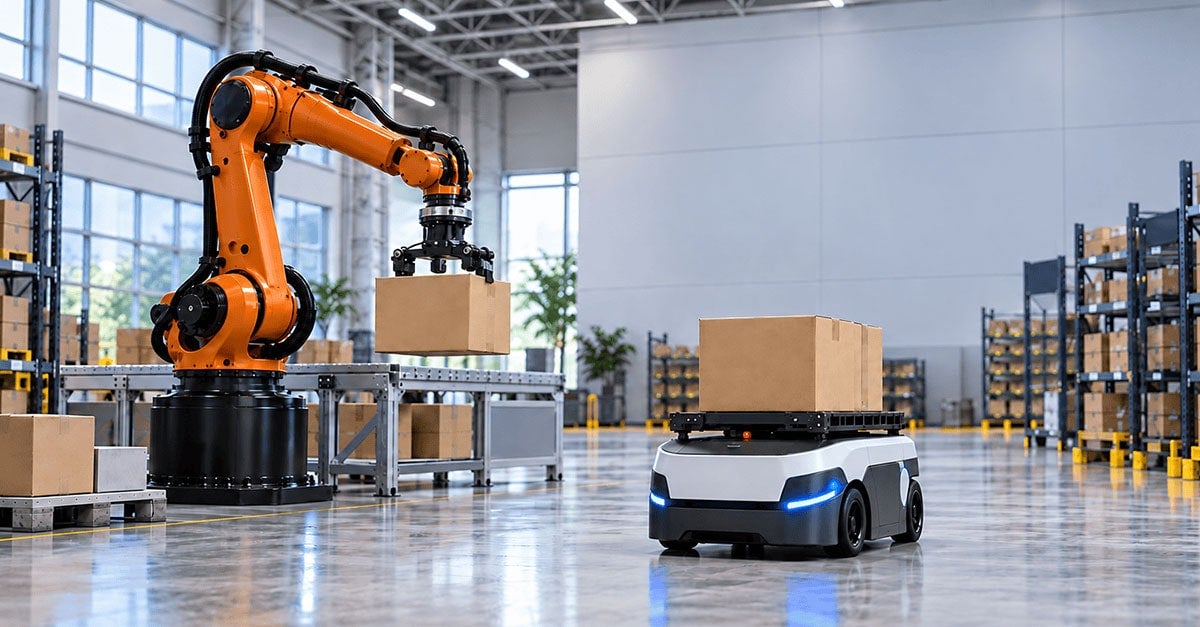
Die Kombination verschiedener Roboterbauformen kann Herstellern helfen, komplexere betriebliche Herausforderungen zu bewältigen und Arbeitsabläufe anstatt einzelner Aufgaben zu automatisieren. Zum Beispiel:, Flex verwendet AMRs Autonome mobile Roboter (AMRs) versorgen Fertigungslinien mit Material, transportieren Komponenten zwischen den Produktionsschritten und befördern Fertigprodukte in die Versandbereiche. Die Kombination dieser Mobilität mit Manipulationsfähigkeiten ermöglicht eine weitere Automatisierung: AMRs sind mit Roboterarmen ausgestattet, die Materialien an mehreren Arbeitsstationen transportieren, aufnehmen und platzieren können. Andere Hybridsysteme kombinieren Radroboter mit Drohnen für die Infrastrukturinspektion oder das mobile Laden. Durch die Verknüpfung mehrerer Arbeitsschritte reduzieren diese Systeme Übergaben und Leerlaufzeiten und verbessern gleichzeitig die betriebliche Flexibilität.
Kunden bei der Auswahl der richtigen Automatisierungsstrategie zu unterstützen, hat Auswirkungen, die weit über den Verkauf hinausgehen. Die Umgebungen, in denen Roboter eingesetzt werden, und die Produktionssysteme, in die sie integriert sind, beeinflussen, wie sie konstruiert, gefertigt und … Unterstützung während des gesamten Lebenszyklus. Da Kunden nach mehr Flexibilität streben, müssen Robotikunternehmen Präzision mit Modularität, Interoperabilität, vereinfachter Bereitstellung, intuitiven Schnittstellen und der Möglichkeit zur Massenproduktion in Einklang bringen.
Kunden aus der Fertigungsindustrie erwarten zudem, dass sich Roboterplattformen nahtlos in Produktionsplanungssoftware, Lagerverwaltungssysteme, Maschinensteuerungen, Flottenmanagement-Anwendungen und Unternehmensanwendungen integrieren lassen. Sie erwarten, dass Roboter einfach zu implementieren, zu aktualisieren, zu warten und an mehreren Standorten skalierbar sind. Die Erfüllung dieser Erwartungen beeinflusst alle Aspekte – von der mechanischen Architektur und der Elektronikintegration bis hin zu Batterieleistung, Cybersicherheit, Kalibrierung und Produktionsteststrategie.
Für Roboterhersteller (OEMs) ist das Verständnis dafür, wie ihre Technologie in den Fertigungsprozess eines Kunden passt, entscheidend dafür, wie ihre eigenen Produkte konstruiert, gefertigt und industrialisiert werden sollten. Je besser diese Perspektiven übereinstimmen, desto besser sind die OEMs aufgestellt, um Roboter zu liefern, die sicher und zuverlässig im Einsatz funktionieren und effizient in großem Maßstab produziert werden können. Im Rahmen unserer Design für Automatisierungspraxis (DfA), Wir nutzen eine Reihe digitaler Simulationswerkzeuge, um Kunden dabei zu helfen, die Produktqualität zu verbessern, marktgerechter zu produzieren und mit steigender Nachfrage zu skalieren. Solche Werkzeuge können auch Roboterherstellern helfen, ihre eigenen oder die Produktdesigns ihrer Kunden sowie ihre Fertigungslinien für die Automatisierung zu optimieren.
Die Empfehlung des richtigen Roboters erfordert ein Verständnis dafür, wie sich die Technologie in den gesamten Fertigungsprozess einfügt, wie sie mit vor- und nachgelagerten Prozessen interagiert und wie sie zu übergeordneten Geschäftszielen wie Durchsatz, Qualität, Flexibilität und Ausfallsicherheit beiträgt. Diese Perspektive ermöglicht fundiertere Gespräche mit Kunden, hilft, neue Automatisierungsmöglichkeiten zu identifizieren und beeinflusst die Produktion und den Support von Robotern. Indem sie Kunden dabei unterstützen, die passenden Technologien für die gewünschten Fertigungsergebnisse zu finden, können Roboterhersteller stärkere Partnerschaften aufbauen, einen höheren operativen Mehrwert bieten und Produkte entwickeln, die sowohl für den Einsatz als auch für die Serienproduktion geeignet sind.
Flex stellt nicht nur Roboter her – wir setzen sie täglich in unseren eigenen Produktionslinien und Lagern weltweit ein. Die Arbeit mit Tausenden von Robotersystemen hat uns wertvolle Einblicke gegeben, wo unterschiedliche Bauformen den größten operativen Nutzen bieten und was für einen erfolgreichen, großflächigen Einsatz erforderlich ist.
In Kombination mit mehr als 55 Jahren Erfahrung in der fortschrittlichen Fertigung hilft uns diese Perspektive, Roboter-OEMs während des gesamten Produktlebenszyklus zu unterstützen, von der Designoptimierung und Industrialisierung bis hin zur regionale Fertigung, Test- und Lebenszyklusdienstleistungen. Ob Sie eine neue Roboterplattform auf den Markt bringen oder eine etablierte skalieren möchten, Flex kann Ihnen helfen, Produkte zu entwickeln, die den Automatisierungsanforderungen Ihrer Kunden entsprechen und für einen zuverlässigen Einsatz und eine effiziente Produktion ausgelegt sind.