Blog
Nachhaltigkeit in der Produktion
Das Weltwirtschaftsforum (WEF) hat die Elektronikindustrie als einen von acht Sektoren identifiziert, die zusammen Sie sind für mehr als 501.340 Tonnen der globalen Kohlenstoffemissionen verantwortlich.. Forscher der University of California (UCI) haben herausgefunden, dass die Treibhausgasemissionen von Elektronikgeräten und dem dazugehörigen Elektroschrott zwischen 2014 und 2020 um 531 Millionen Tonnen gestiegen sind. Allein im Jahr 2020 wurden 580 Millionen Tonnen emittiert, was etwa 41 Millionen Tonnen der gesamten globalen Treibhausgasemissionen entspricht. Bei der aktuellen Wachstumsrate der Branche schätzen die UCI-Forscher, dass die Emissionen bis 2030 auf rund 852 Millionen Tonnen ansteigen werden, sofern keine regulatorischen Maßnahmen ergriffen werden.
Angesichts der zunehmenden globalen Bemühungen zur Reduzierung von Emissionen reagieren führende Branchenakteure wie Flex, indem sie sich an den sich entwickelnden Vorschriften und Praktiken zur Kohlenstoffbilanzierung beteiligen und diese einhalten.
In diesem zweiten Blogbeitrag einer Reihe, die beschreibt, wie Flex Power Modules die Nachhaltigkeit seiner Geschäftstätigkeit verbessert, konzentrieren wir uns auf den Forschungs- und Entwicklungsprozess.
Die US-Umweltschutzbehörde (EPA) schätzt, dass zwischen 701 und 801 Tonnen der Umweltauswirkungen eines Produkts in der Forschungs- und Entwicklungsphase (F&E) des Produktlebenszyklus ermittelt werden. Dies unterstreicht die Bedeutung eines nachhaltigen F&E-Ansatzes. Gleichzeitig berichtet das Weltwirtschaftsforum (WEF), dass 771 Tonnen der Emissionen der Elektronikindustrie Scope-3-Emissionen sind, d. h. sie sind auf die gesamte Lieferkette zurückzuführen, einschließlich vorgelagerter und nachgelagerter Aktivitäten.
Es reicht daher nicht aus, dass Branchenführer wie Flex lediglich die Emissionen der Bereiche 1 und 2 kontrollieren; wir tragen die Verantwortung für die Nachhaltigkeit unserer gesamten Lieferkette. Unsere Forschungs- und Entwicklungsabteilung spielt am Anfang des Entwicklungsprozesses eine Schlüsselrolle bei der Reduzierung der Treibhausgasemissionen der Bereiche 1, 2 und 3, indem sie Produkte über ihren gesamten Lebenszyklus hinweg nachhaltig gestaltet.
Bei Flex Power Modules haben wir unsere Forschungs- und Entwicklungsabteilung schrittweise transformiert, um sicherzustellen, dass Nachhaltigkeit neben Funktionen, Leistung und Kosten von Beginn an ein zentrales Designziel in jedem neuen Projekt darstellt. Die Aufgabe der Forschungs- und Entwicklungsabteilung von Flex Power Modules besteht nicht nur darin, Produkte mit Blick auf eine nachhaltige Fertigung zu entwickeln, sondern auch die Nachhaltigkeit über den gesamten Produktlebenszyklus hinweg zu verbessern. Dies beinhaltet die Überprüfung der Beschaffungsrichtlinien und Partner in der Lieferkette, Neben unseren eigenen Vertriebsaktivitäten müssen auch die Nutzungsgewohnheiten unserer Kunden berücksichtigt werden, damit die Konstruktionen auf Effizienz im Betrieb, Verlängerung der Lebenszyklen und Reduzierung von Abfall am Ende der Nutzungsdauer ausgerichtet sind.
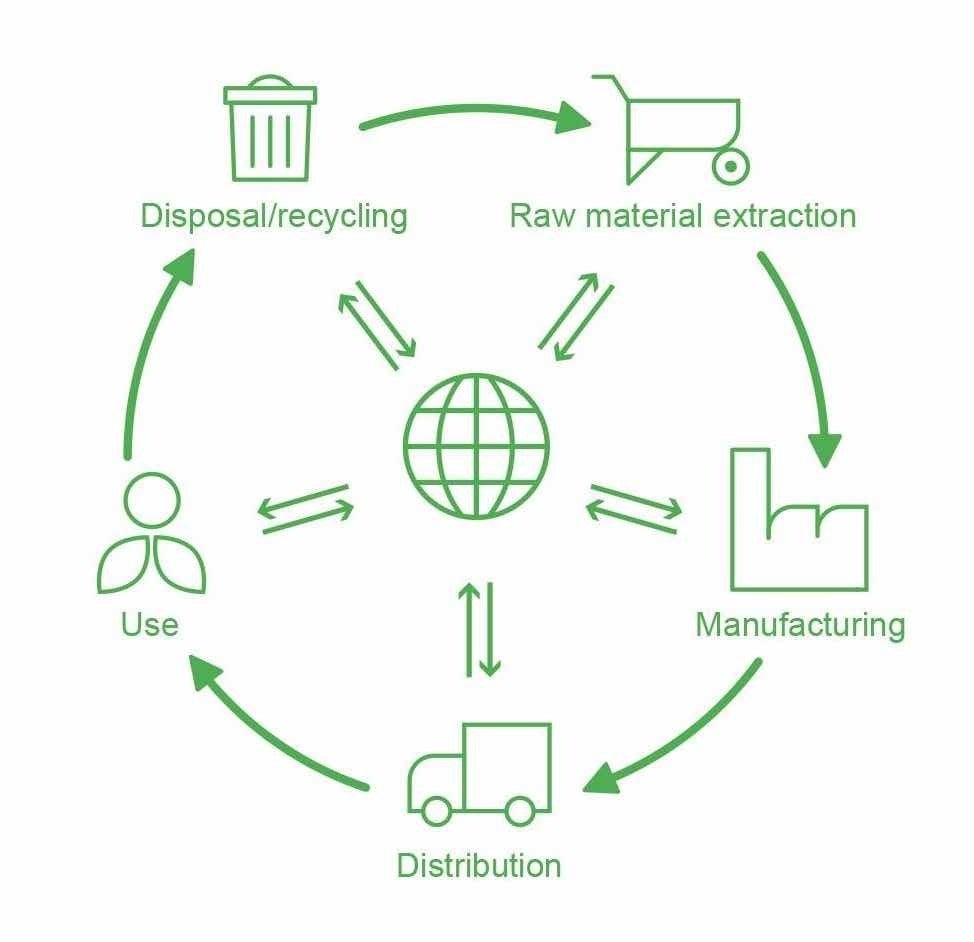
Seit über 20 Jahren, Flex-Leistungsmodule Das Unternehmen wendet die Techniken, Prinzipien und Methoden des umweltgerechten Designs (Design for Environment, DfE) konsequent in allen Produktentwicklungsprojekten an. DfE verpflichtet Unternehmen wie Flex Power Modules, bei der Entwicklung neuer Produkte den Lebenszyklusansatz (Life Cycle Thinking, LCT) zu berücksichtigen, um Qualität und Kosten zu erhalten oder zu verbessern und gleichzeitig die Umweltauswirkungen zu reduzieren. LCT umfasst fünf Aspekte des Produktlebenszyklus: Rohstoffgewinnung, Herstellung, Verpackung und Vertrieb, Nutzung und Entsorgung.
Dieser Ansatz führte zu einer grundlegenden Überarbeitung des Zuverlässigkeitsprüfungsprozesses für Flex-Leistungsmodule. Durch den Einsatz regenerativer Lasten konnte der Stromverbrauch deutlich gesenkt und gleichzeitig durch die Einführung der Kühlkreislaufanlage das Abwasser von zuvor 500.000 m³ vollständig eliminiert werden.3 pro Jahr. Die in dem Prozess verwendeten Kühlkammern wurden ebenfalls auf neuere, effizientere Modelle umgerüstet, die umweltfreundliche Flüssigkeiten verwenden.
Der DfE-Ansatz von Flex Power Modules hat auch zur Einführung von Beschränkungen für die Verwendung gefährlicher Stoffe wie Blei, Quecksilber, Cadmium und sechswertigem Chrom geführt und somit die Einhaltung der RoHS- und REACH-Richtlinien sichergestellt. Unsere Produkte und Prozesse entsprechen zudem den eigenen Listen verbotener Stoffe von Flex Power Modules. Diese umfassen neben den in den RoHS- und REACH-Richtlinien aufgeführten Stoffen auch eine umfangreiche Liste weiterer Stoffe, die aufgrund von Umweltauflagen oder -bedenken verboten, beschränkt oder unter Beobachtung stehen.
DfE treibt außerdem die Entwicklung hocheffizienter DC/DC-Leistungsmodule voran, die den Energieverbrauch der Anwendungen unserer Endkunden senken und so deren Scope-1-Treibhausgasemissionen sowie unsere eigenen Scope-3-Emissionen reduzieren. Die innovative Anwendung digitaler Steuerungstechnologie bei den Flex-Leistungsmodulen, beispielsweise bei der wegweisenden BMR453-Serie von isolierten DC/DC-Wandlern in Viertel-Baustein-Bauweise, trägt auf vielfältige Weise zur Emissionsreduzierung unserer Kunden bei. Die Module erreichen Wirkungsgrade von bis zu 96,11 TP34T und verringern so den CO₂-Fußabdruck der Produkte unserer Kunden. Neben der Verbesserung der Energieeffizienz trägt dieser Ansatz durch die Optimierung der Dimensionierung und der Kosten der Systemkomponenten zu niedrigeren Gesamtbetriebskosten für unsere Kunden bei. Der höhere Integrationsgrad, der mit dem digitalen Controller-IC erreicht wird, reduziert die Anzahl der benötigten Komponenten wie Lüfter, Klimaanlagen, Kühlkörper, Netzteile und Notstromversorgung. Die kleinere Materialliste verbessert die Nachhaltigkeit durch weniger Elektroschrott am Ende der Lebensdauer sowie durch reduzierte Test-, Verifizierungs- und Handhabungsverfahren und einen geringeren Dokumentationsaufwand.
Die Messung und Kontrolle von Scope-3-Emissionen gilt weithin als Schlüsselelement für die Nachhaltigkeitsstrategie eines jeden Unternehmens, und die Standards für die CO₂-Bilanzierung konzentrieren sich zunehmend auf deren Messung und Kontrolle. Forschung und Entwicklung können Scope-3-Emissionen maßgeblich beeinflussen, indem sie Beschaffungsoptionen anhand von Nachhaltigkeitskriterien bewerten und energieeffiziente Produkte mit minimalem Abfall am Ende ihrer Lebensdauer entwickeln. Bei Flex Power Modules steht unsere Forschungs- und Entwicklungsabteilung im Zentrum unseres Nachhaltigkeitsansatzes, und wir werden weiterhin Best-Practice-Ansätze beobachten und anwenden, im Einklang mit dem ESG-Plan von Flex.
Nachhaltigkeit in der Produktion