Solution Brief
Medium voltage (MV) switchgear and control E‑house
Discussion around AI data centers typically focuses on chips, cooling, and rack designs. Yet on many hyperscale sites, the factor that ultimately determines when racks can be powered sits further upstream: grid access and how quickly on-site MV infrastructure, which typically has lead times of 18–36 months, can be delivered safely, reliably, and without unexpected issues.
Rack power densities in AI facilities have moved well beyond historical norms with modern GPU-based systems often operating at or above 100 kW per rack, with some liquid-cooled architectures driving power densities higher. Uptime Institute notes that AI training workloads are changing how operators think about resilience planning, fault management, and future capacity planning.
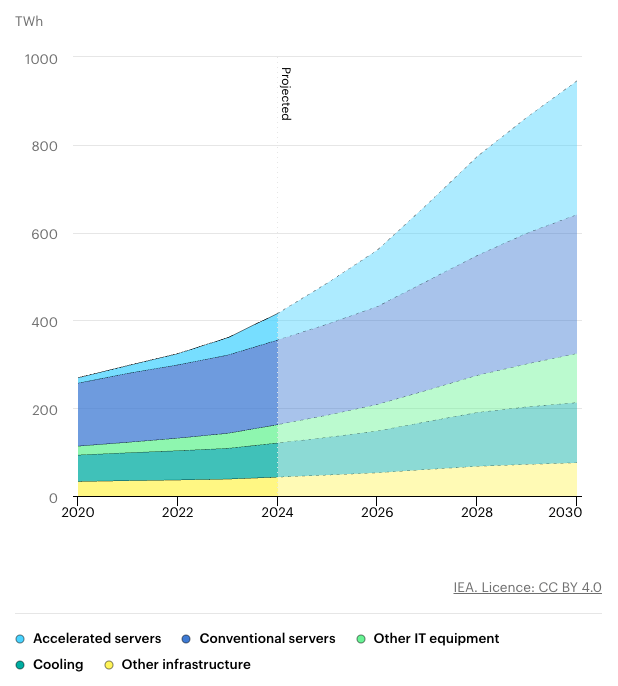
At the same time, overall electricity demand from data centers is rising sharply. The International Energy Agency (IEA) forecasts global data center electricity consumption could reach 945 terawatt hours (TWh) by 2030. Grid reliability authorities in North America have warned that rapid large-load growth is increasing system adequacy risks. In January 2026, NERC cautioned that accelerating demand — including from new high-capacity connections to AI data centers — will require careful planning to maintain reliability.
For hyperscale operators racing to bring new capacity online quickly across regional hubs, the message is increasingly clear: Time to compute depends on time to power.
In many markets, grid connection delays are limiting new data center capacity. Interconnection backlogs and network upgrades are extending development programs beyond what AI expansion plans anticipated.
Regulators are beginning to respond. In the US, FERC’s interconnection reforms aim to streamline processing and reduce backlogs, acknowledging that the system has struggled under rising demand.
In the UK, Ofgem has launched reforms to accelerate viable demand connections, while the government has identified grid access as an obstacle to establishing proposed AI Growth Zones.
These policy shifts may ease structural bottlenecks over time. They do not, however, remove the complexity of building and commissioning new MV infrastructure. Grid access and MV delivery have become more prominent factors in development strategy than they were just a few years ago.
Traditional site-built substations and MV yards have long been the default delivery method on many projects — civil works first, then structural steel, followed by switchgear placement, cabling, protection and controls, and commissioning. It is a proven approach, but it is often sequential and highly dependent on factors such as on-site skilled labor availability, weather windows, and complex coordination across multiple contractors.
For AI data centers, build cycles demand a different mindset. If the data hall, mechanical plant, and networking infrastructure can be delivered in parallel, the upstream electrical interface should be structured the same way. That is why prefabricated modular MV electrical houses, or E-houses, are receiving renewed attention.
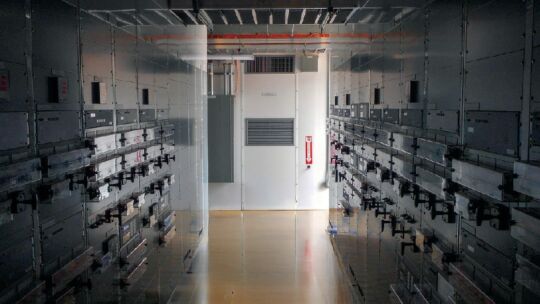
An MV E-house integrates power distribution and control systems within a single prefabricated structure. It consolidates switchgear, protection, and control systems within a factory-built substation, shifting much of the integration and testing away from the data center location.
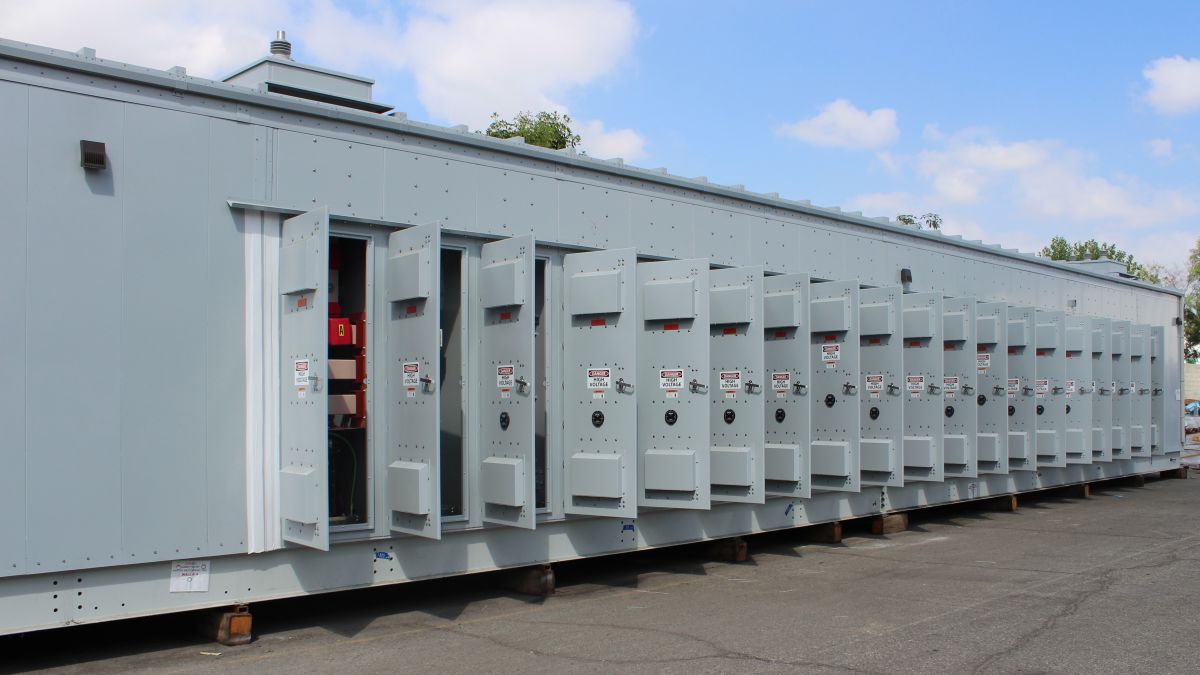
The distinction is not about debating containers versus buildings. It is about sequencing. By assembling and validating the MV backbone in a controlled off-site environment, electrical systems can progress while civil works and utility coordination continue. This improves project flow and reduces commissioning risk and uncertainty.
When delivered as a fully tested unit, on-site work is largely limited to foundations, cable terminations, and final integration checks rather than full system assembly.
Standardized design platforms combined with project-specific engineering can shorten commissioning time significantly — in some cases by more than 25 percent — while reducing on-site labor requirements.
Although results may vary by region and scope (particularly in labor-constrained markets), earlier integration and testing can lower rework risk, improve cost certainty, and reduce total installed cost.
Importantly, modular delivery does not change technical standards. MV E-house systems are typically designed and tested to the same requirements as conventional installations, including IEC 62271-200 for metal-enclosed switchgear and IEEE C37.20.7 for internal arc performance. Integration moves off-site, but protection and safety requirements remain unchanged.
MV choices increasingly influence downstream design and long-term strategy. As rack power climbs, upstream voltage levels affect conductor sizing, protection strategies, and overall system efficiency. The industry is examining different distribution concepts, including 800 VDC architectures, to manage current, copper, and losses.
Even where such approaches are not adopted, the direction of travel is clear. Electrical design is being reconsidered from the grid connection through to the rack. MV is no longer a fixed upstream interface; it is intrinsically tied to how facilities are built, expanded, and optimized.
MV infrastructure must now support AI campus growth, higher rack densities, and faster build programs. What was once treated as a fixed entry point is now an active design decision with implications for cost, risk, and delivery speed.
Suppliers such as Crown Technical Systems, a Flex company, offer MV E-houses as a successful way to bring capacity online faster. Consolidating engineering, assembly, and testing within a controlled manufacturing environment improves delivery predictability, while alignment with broader grid-to-chip strategies supports reliability and operational performance at scale.
As AI data center expansion accelerates, operators are turning to factory-integrated upstream electrical systems. Sequential, site-built models are more difficult to reconcile with hyperscale build programs.
Ultimately, MV delivery capability will matter as much as design intent. It must become faster, more predictable, and integrated earlier in the build program while remaining aligned with the standards and testing frameworks that govern mission-critical power systems.