
联系我们

从电网到芯片:优化人工智能数据中心的电力

发表于
3 7 月, 2025

Addressing the constraints of power system architectures in data centers

Data center operators need access to more power sources and the ability to efficiently distribute this power from the grid, through the facility and rack, and ultimately to the chip. At the same time, there is mounting pressure to reduce the capital outlay for computing infrastructure, including power supplies, distribution systems, and cooling solutions. Cutting energy costs and reducing environmental impact are equally critical. As operators aim to boost return on investment and gain a competitive edge through infrastructure optimization, maximizing power conversion, and minimizing operational costs become top priorities.

However, power system architectures face some significant limitations. For instance, the ongoing trend towards lower voltages and higher currents at the chip level means that the final conversion stage must be very close to the load to ensure minimum voltage drop and interference caused by connection inductance and to cope with the higher load transient requirements of the latest processors. Additionally, placing power electronics near the chips poses thermal management challenges, particularly in already confined spaces.

Upstream power conversion from voltage regulator modules at the processors is completed in stages using a distributed power arrangement. This approach typically involves utility-connected AC/DC converters, backup systems, and intermediate buses with associated power converters operating at voltages that keep currents at manageable levels. These stages help minimize interconnection sizing and cost, power losses, and voltage drops across the system.

Designing an optimal power architecture also involves integrating power converters within the data center’s cooling infrastructure, as well as taking decisions on possible areas to incorporate galvanic isolation in the power conversion to mitigate safety risks and ground loops. Ultimately, physical space constraints and thermal requirements — dictated by power density and efficiency — play a decisive role in where and how power equipment is deployed.

Identifying an optimal solution for data center power distribution

Encompassing everything from traditional AC grid transformers and switchgear to mechanical busbars and high-frequency DC/DC converters operating at megahertz (MHz) speeds, power distribution within a data center spans a broad range of technologies. With so many options available, determining the most effective configuration can be difficult to evaluate and, in some cases, prone to subjective judgements.

For example, a system architect might be in favour of distributing power at 800 V直流 rather than 48 V直流 to reduce current levels, minimize power losses and voltage drops, and enable the use of smaller, more cost-effective busbars and cabling. However, this higher voltage introduces stricter compliance requirements, necessitating additional insulation, galvanic isolation, and certification processes. It also raises the bar on personnel safety, allowing only appropriately qualified engineers and technicians to work on such systems. In contrast, bus voltages at 48 V直流 remain a popular choice with the advantage of widespread industry adoption and proven component options offering multiple sources and lower cost due to economies of scale. They are also inherently safe, as they are below the safety extra-low voltage (SELV) limits.

Another key design consideration is whether the intermediate bus voltages should be regulated or unregulated. Unregulated, isolated designs can provide higher efficiency and better power density, but they typically require a careful selection of downstream converters to ensure compatibility. Some systems adopt hybrid regulation schemes, where the bus voltage is allowed to fluctuate within predefined limits, with active control engaging only beyond these thresholds. This approach maintains high efficiency while offering greater flexibility for downstream power conversion.

Achieving end-to-end power conversion optimization in data centers

Identifying the optimal solution for grid-to-chip power conversion and distribution requires a holistic approach. Conventional power tree architectures are less suitable for aligning with the needs of next-generation systems, as the boundaries between conversion stages are shifting. For example, DC/DC converters are now closely integrated electrically and thermally with processors using vertical power delivery (VPD) technologies tailored to match the unique pin-out configurations of individual processors.

When components of the power conversion chain are sourced from multiple vendors, the risk of incompatibility increases. Each supplier may promote proprietary technologies that do not align seamlessly with others, complicating efforts to build a fully cohesive system. This underscores the value of working with an experienced and trusted power conversion partner capable of delivering end-to-end integrated solutions — ensuring alignment across components while optimizing performance, reducing costs, and delivering long-term support and guidance.

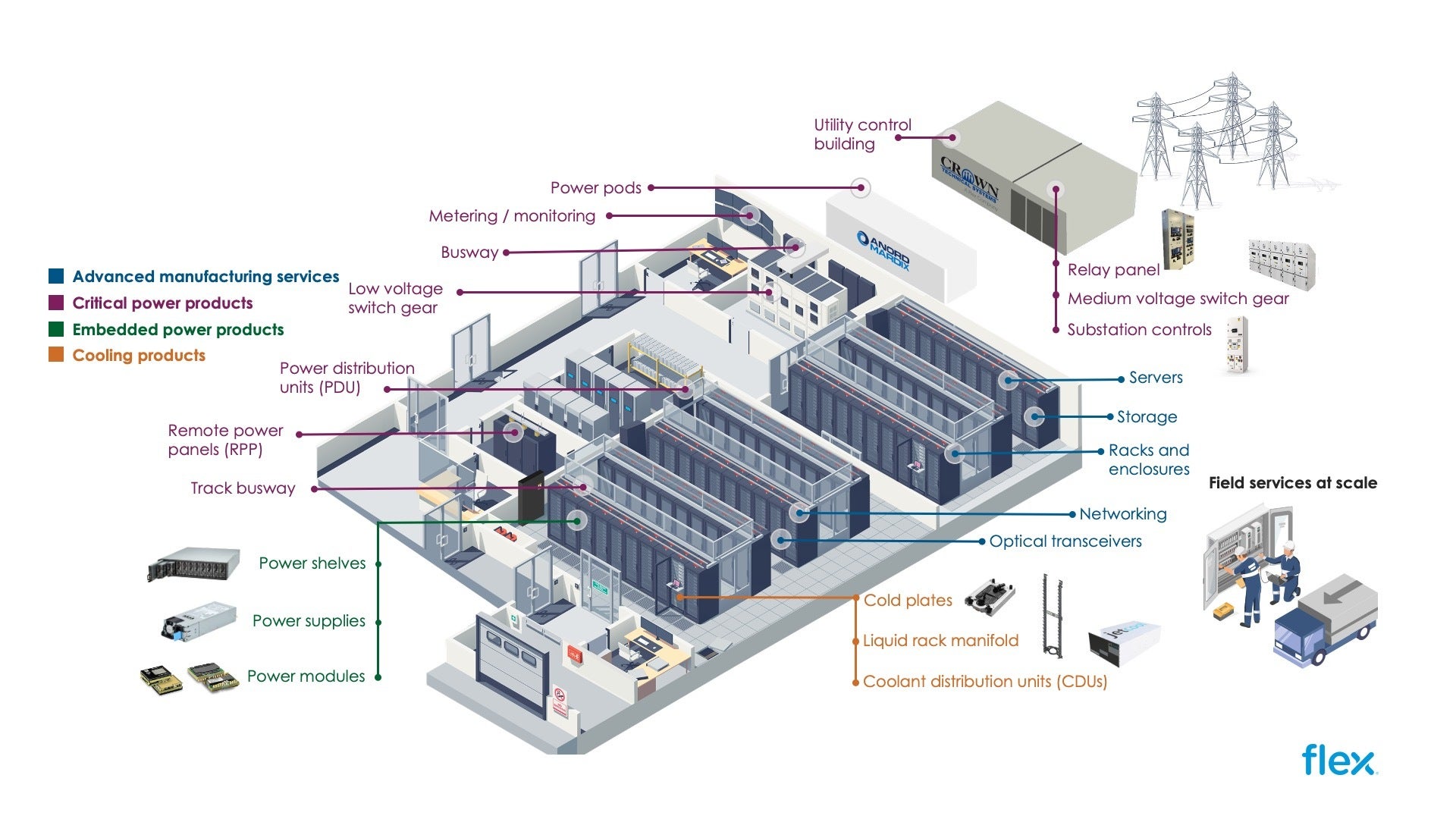
Flex offers a wide range of data center power and cooling products, including DC/DC regulators and bus converters, and solutions for medium and low voltage AC/DC conversion, power distribution, critical backup power systems, and rack- and chip-level cooling. Flex also provides custom design solutions, including vertical power delivery configurations and simulation tools to model systems prior to implementation. As well, Flex offers comprehensive monitoring and support to ensure ongoing performance and reliability.

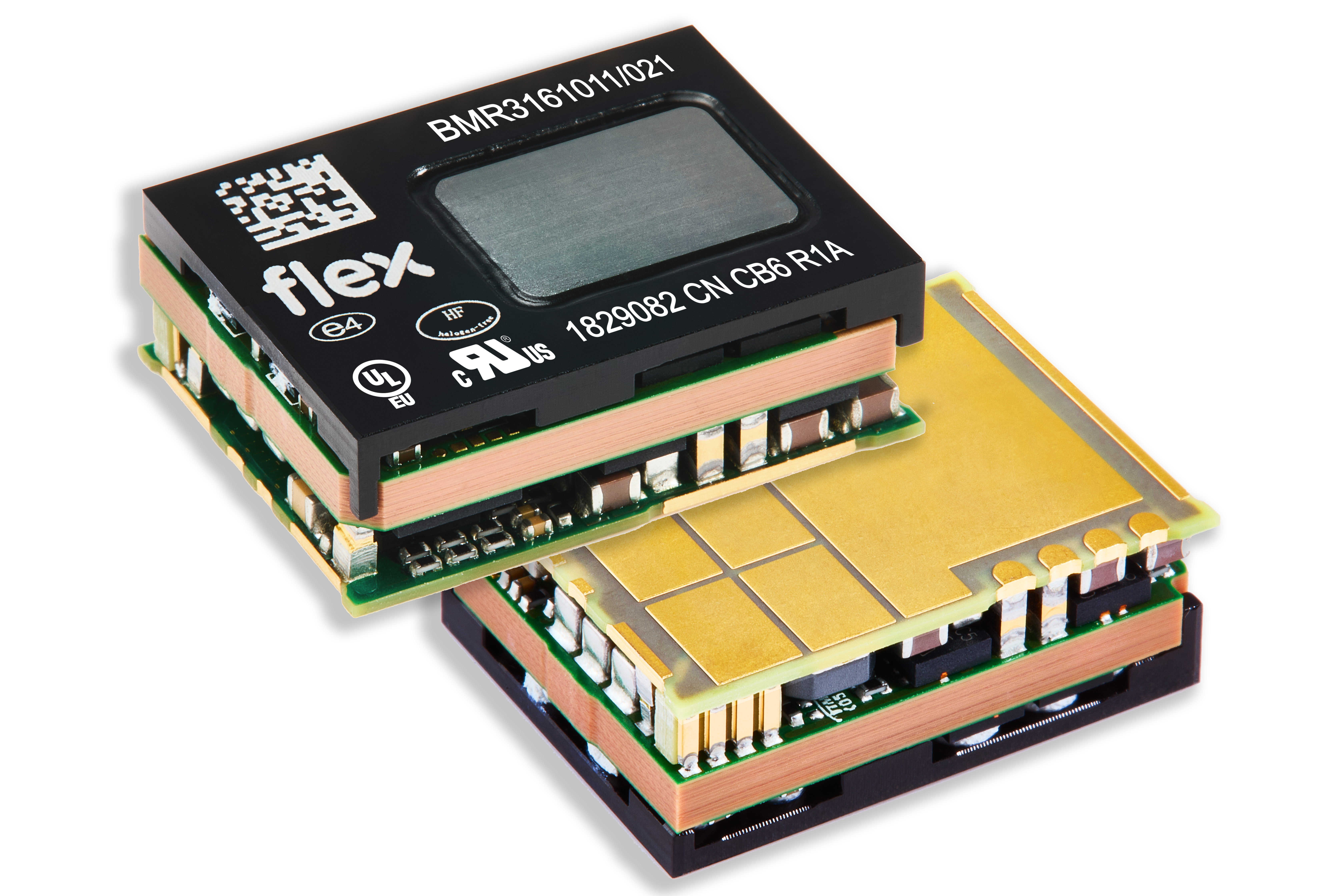
BMR316

With demand for data center capacity continuing to grow at a rapid pace, data center operators require trusted partners who can deliver not just products but complete, scalable solutions. Flex brings deep expertise across design, product, manufacturing, systems integration, and supply chain management — empowering data centers to scale efficiently and meet evolving performance needs with capacity coming online when required. From established facilities to greenfield deployments, fast, reliable rollout of next-generation power and cooling infrastructure on a global scale is now a critical factor in data center resilience.

Vertical power delivery boosting efficiency and performance

垂直电力输送 (VPD) helps manage power in data centers by boosting efficiency and reliability and significantly reducing energy loss. Traditional lateral power delivery methods often lead to considerable power dissipation across the printed circuit board (PCB), increasing energy costs and complicating thermal management. In contrast, VPD shortens the power transmission path by placing voltage regulators directly beneath high-performance processors. This closer proximity minimizes power plane resistance, enhances current density, and dramatically lowers power losses. VPD designs that enable direct underside connections to processors and ASIC power pins further optimize efficiency and performance.

Improving cooling efficiency at the chip level

While accelerated compute platforms have introduced power requirements to data centers, the heat they generate has created a massive challenge for cooling solutions. Direct-to-chip cooling transfers heat from processors to liquid-cooled cold plates. This approach in data centers can significantly outperform forced air cooling in heat transport/removal and make board design more flexible, eliminating the need to place processors and heatsinks near an air exit. JetCool, a Flex company, enhances this approach with microjet technology, precisely targeting hotspots to improve cooling efficiency at the chip level.

Uninterrupted power, intelligently managed

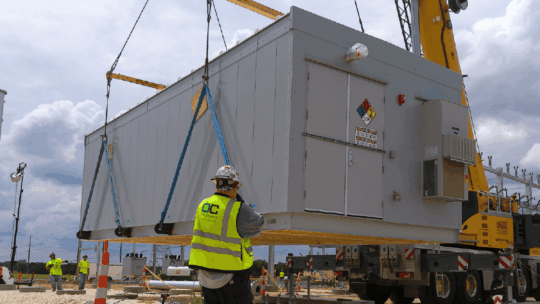
Reliable, scalable power is essential for ensuring data centers avoid downtime and data loss and retain high efficiency and security. The risks of power failure, load imbalances, and inefficient distribution can result in significant consequences, from service outages to overheating and equipment failure. Prefabricated modular systems, such as those developed by Anord Mardix, a Flex company, can eliminate time-consuming and costly modifications to data center expansion plans.

With courtesy of Components in Electronics