博客
将机器人外形尺寸与制造结果相匹配
Robots have captured the imagination for millennia. From Hephaestus’ intelligent handmaidens in The Iliad and early BCE engineers’ automated machines to today’s factory arms and experimental humanoids, robots have been envisioned as tools, toys, helpers, and warfighters. Their capabilities are on full display in manufacturing and industrial settings worldwide, but scant attention is paid to what it takes to produce them, much less produce them at scale. Making one robot is a technological accomplishment. Making thousands that are identical, reliable, and commercially viable is a manufacturing triumph.
AI, perception, dexterity, and autonomy are redefining what robots can do, but keeping pace with competitors requires solving another engineering challenge: industrialization. Commercial success depends on designing robots — technologically sophisticated, complex machines — optimized for manufacturing and long-term viability, not just performance in the lab or at the trade show. That requires a completely different way of thinking. A robot should be engineered as a system, and so should its production.
Industrialization begins long before the first production build. It starts as product architectures are defined, when decisions about materials, components, interfaces, and system integrations are being made. Performance is only one design objective. Shifting from prototype to production to market proliferation requires that engineers also consider manufacturing efficiency, testing, serviceability, 供应链弹性, and long-term operating costs.
For robotics original equipment manufacturers (OEMs) moving from research and development to commercial scale, the objective is to optimize the entire system holistically. Innovation and industrialization are different disciplines, but they share a common starting point.
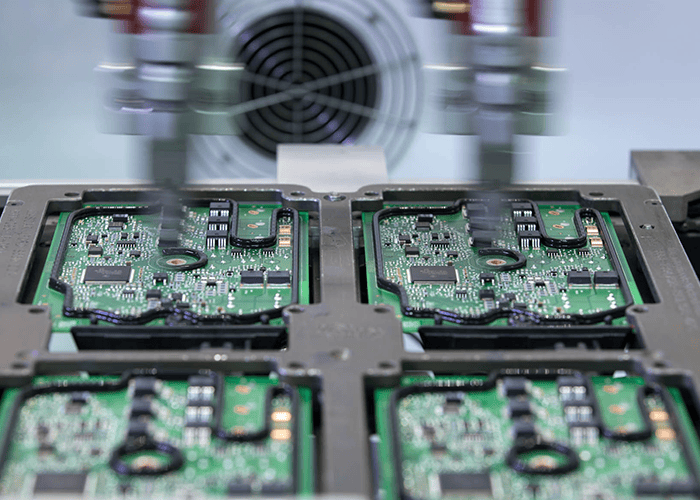
Industrialization is a difficult transition for many OEMs precisely because many of these considerations tend to be thought of as what happens after the robot is designed — a performance-first view. While robots must certainly be fit for purpose, they must also be fit for production if the goal is widespread adoption and profitability. The National Institute of Standards and Technology continues to identify manufacturing capability as a key determinant of industrial competitiveness, underscoring the importance of scaling production alongside product innovation. Material selection, part count, manufacturing complexity, testing requirements, and production yield are largely established during design, making early engineering decisions the primary drivers of manufacturing efficiency, scalability, and unit cost.
Engineering a breakthrough design is one thing. Engineering a breakthrough design that can be produced by the thousands with the same precision, quality, and performance, regardless of manufacturing timeline, location, or quantity, is quite another. Achieving that level of consistency for highly complex robotic systems requires an integrated manufacturing ecosystem in which engineering, supply chain management, production, quality, testing, and logistics operate as interconnected functions rather than independent disciplines.
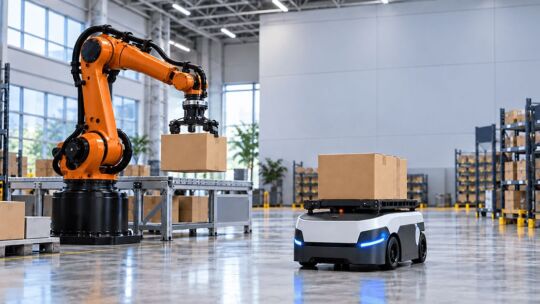
We see the benefits that arise from early, end-to-end planning as both a user and manufacturer of robotics platforms. Flex manufactures millions of products for companies in myriad sectors every day, including robotics—and we do it, in part, by deploying 5,000-plus robots across our facilities, including automated guided vehicles (AGVs), autonomous mobile robots (AMRs), robotic arms, cobots, and hybrid platforms. Performance, reliability, and scalability are as important to us as a user as they are to any other robotics customer.
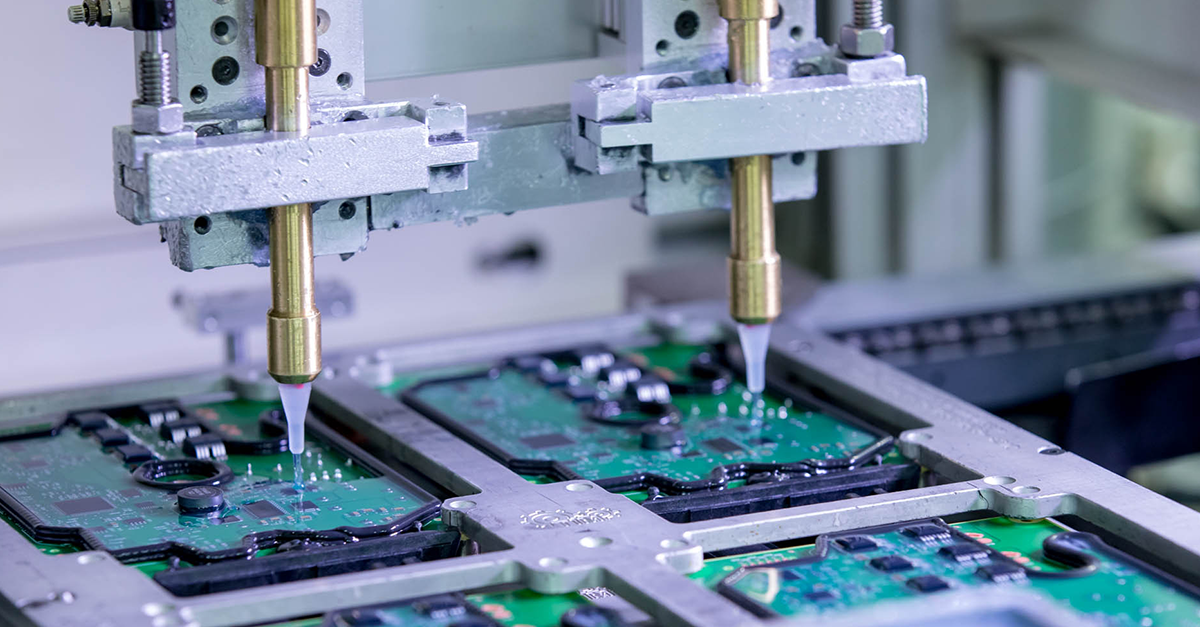
A systems approach is critical as robotics companies move from pilot builds to commercial production. Changes in one area inevitably affect others. A late component substitution may require new software validation, revised test procedures, updated work instructions, and additional operator training. An engineering modification can alter sourcing strategies, manufacturing workflows, inspection criteria, and inventory planning. Even small adjustments can ripple through production and beyond. Our goal is often to help customers coordinate the entire production phase, from design and supply chain considerations to manufacturing and deployment dynamics.
Manufacturing systems must be designed to absorb demand fluctuations, qualify alternate suppliers, introduce engineering changes with minimal disruption, and maintain consistent quality across products, production sites, and geographic regions.
Customers buy operational performance. Software updates, changing production requirements, evolving regulations, and continuous use do not alter their expectations. A robot’s value depends on how it is supported, not just how it is designed and manufactured. While they are offset by automation-derived benefits, robotics systems still represent a significant capital investment and are often deployed in the field for years.
Products built for long-term use must be designed with diagnostics, maintenance, repair, upgrades, and refurbishment in mind. Mechanical assemblies, electronics, software, and replacement parts all contribute to uptime. Service and performance data from the field informs engineering improvements, manufacturing refinements, and future product generations, creating a continuous feedback loop that strengthens the product lifecycle.
Supporting robot deployments at scale also requires operational capabilities that extend beyond engineering and production. Global spare parts networks, repair infrastructure, configuration management, software release processes, and technical support all become part of the product experience. As robot fleets grow, these capabilities increasingly influence customers satisfaction, operating costs, and commercial success.
Many inventions have fallen by the wayside because production considerations weren’t incorporated into the design from the beginning. As the World Intellectual Property Organization notes, innovation ultimately depends on the capabilities required to commercialize products, including production methods, supply chain optimization, and 制造专业知识.
Industrialization is where engineering and manufacturing excellence converge. As robots become more capable and demand accelerates across industries, engineering breakthroughs must translate into repeatable, scalable products supported throughout their lifecycle. That requires systems thinking at every stage. Design decisions influence manufacturing. Manufacturing decisions influence quality, availability, and cost. Lifecycle support shapes the customer experience and provides the operational insight that informs the next generation of products. Each discipline contributes to the success of the others.
Engineering a working robot requires solving thousands of technical challenges. Scaling that robot into a commercial product requires solving manufacturing challenges with the same level of discipline. Product architecture, supply chain strategy, production flow, quality and testing systems, software management, and lifecycle support all have to mature together. At Flex, we help robotics companies connect those disciplines. Our 先进的制造能力 combine automation, digital manufacturing, AI-enabled inspection, global supply chain expertise, and lifecycle services into a production system designed for repeatability, quality, and scale.
Whether launching a first commercial platform or expanding global production, we help robotics OEMs translate engineering innovation into products that can be manufactured consistently, deployed confidently, and supported throughout their lifecycle.