Blog
De la innovación a la industrialización: ¿Qué se necesita para fabricar robots a gran escala?


Consider two sales conversations. In one, a manufacturing customer asks about robot payload, reach, and cycle time. In the other, the discussion begins with production bottlenecks, labor constraints, quality concerns, changeover frequency, and throughput targets. Both conversations may end with the same robotics platform, but only one begins with the manufacturing problem. That distinction is reshaping what customers expect from robotics companies.
High‑precision, automated processes are enabling manufacturers to achieve superior quality at scale, lowering defect rates while protecting brand and margin, making automation a strategic priority for manufacturers worldwide. Deloitte’s 2025 Smart Manufacturing Survey found that nearly half of manufacturing executives ranked process automation as their first or second investment priority over the next two years, reflecting a broader shift toward automation as a long-term operational capability rather than a collection of isolated capital projects. As automation spending grows, manufacturers are raising the bar for investment decisions.
For robotics original equipment manufacturers (OEMs), that evolution has important implications. As AI, perception, autonomy, battery, and manipulation technologies mature, technical performance alone will not be enough to stand out from competitors. Manufacturers expect robotics partners to understand production systems, operational constraints, and the business objectives driving automation investments. As a global manufacturer that deploys thousands of robotics systems in our facilities worldwide, we can attest to the importance of a robotics company understanding not only their own products’ capabilities, but how those capabilities best suit our needs.
Insight into the way in which customers evaluate and make decisions about automation is a sales advantage, but its value is much deeper. That knowledge is most beneficial when applied early to help shape a robotics OEM’s product strategy, engineering priorities, manufacturing readiness, and commercialization before key decisions are locked in.
Another thing we can personally attest to: Manufacturers do not invest in automation because they want more robots on the factory floor. They invest because they want stronger business performance — higher throughput, consistent quality, production flexibility, resilient operations, and other considerations shape every automation investment. They want to understand how a robot fits into existing workflows, integrates with factory software, and contributes to measurable operational improvements over time. For robotics OEMs, this broadens the lens from technology and tool specifications to end-to-end production dynamics. Competitive differentiation comes from demonstrating an understanding of manufacturing performance.
That also means recognizing when robots are not the best answer. Automating one process while bottlenecking another isn’t a solution. Some processes are better addressed through improved workflows, better fixturing, software integration, or changes to the production line rather than additional automation. In other cases, manufacturers will achieve greater value by automating different parts of the process first. Robotics OEMs willing to make those recommendations — even when it means delaying or diminishing a near-term sale — build the credibility and trust that leads to stronger customer relationships over time.
Product roadmaps are naturally driven by technical possibilities. New sensing technologies, more capable AI models, improved mobility, and greater dexterity all create opportunities for innovation. Understanding which capabilities remove barriers to adoption is just as important. Flex and other manufacturers consistently value characteristics that streamline deployment, integration, and long-term operation, such as system interoperability, modular architectures, intuitive interfaces, fleet management capabilities, and simplified maintenance. Real-time operational visibility and seamless access to performance data are also vital as robot fleets expand. Manufacturers expect robots to be part of the factory’s digital nervous system rather than just isolated pieces of equipment.
These capabilities rarely generate headlines, but they determine how successfully robots perform in real-world production environments. Deep knowledge of customer operations helps robotics OEMs prioritize innovations that create lasting operational value instead of incremental technology improvements.
The same perspective influences engineering decisions. Manufacturing customers (Flex included) evaluate robotic solutions across their entire lifecycle. They consider commissioning time, operator training, software management, repair and replacement, upgrade paths, and long-term reliability alongside technical performance. Those expectations should guide engineering choices at the earliest stages of design.
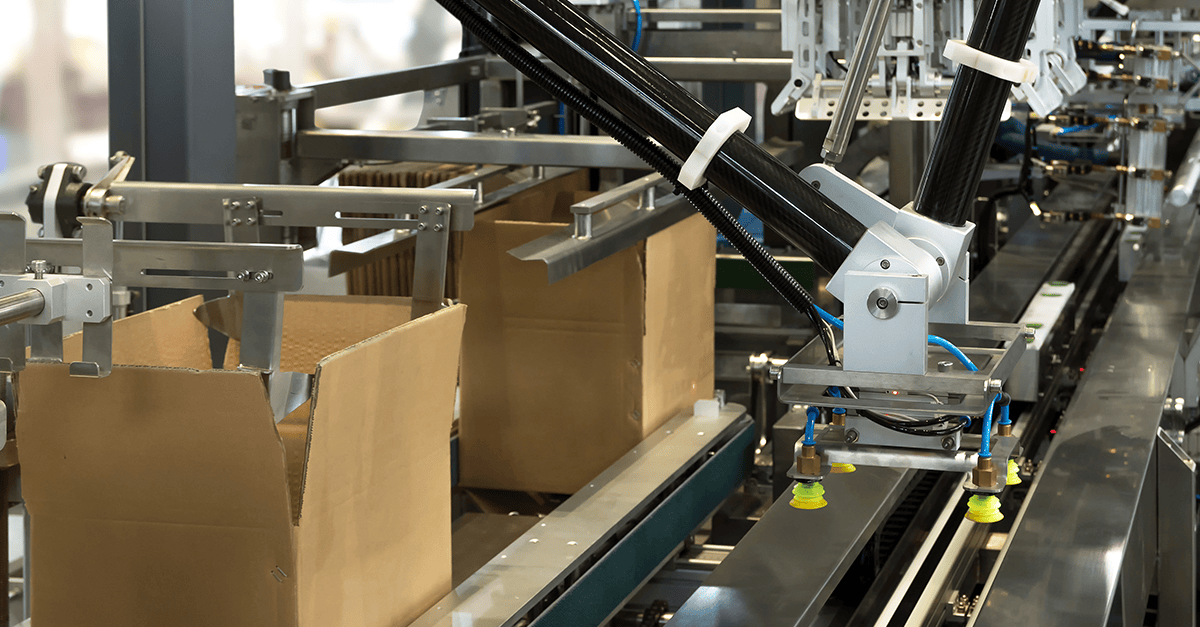
For instance, simplifying calibration reduces deployment time across hundreds of installations. Standardized interfaces make integration with customer equipment faster and less expensive. Modular electronics and mechanical assemblies simplify repairs while supporting future product iterations. Robust production test strategies improve quality while reducing manufacturing variability.
That principle extends into the field. Designing robots to generate meaningful operational data allows manufacturing customers to monitor utilization, identify emerging maintenance issues, optimize workflows, and continuously improve production performance.
For robotics OEMs, data architecture is as important as mechanical architecture because it determines how effectively customers can operate and scale their fleets over time. Operational perspective leads to better engineering decisions because it extends the design process beyond the robotics platform itself.
The manufacturing problem is only part of the equation. Manufacturers also have to satisfy the operational, regulatory, and governance requirements unique to their industry. A robot destined for a medical device production line faces different expectations than one deployed in an automotive plant or distribution center. Depending on the application, customers may require validated production processes, complete product traceability, documented software changes, cybersecurity protections, functional safety certifications, or compliance with industry-specific quality systems and regulatory frameworks.
Whether customers operate under FDA quality system requirements, aerospace traceability standards, automotive quality frameworks, or corporate cybersecurity policies, robotics platforms have to fit within established governance structures as seamlessly as they fit within production workflows. While a robot bill of materials may be similar across use cases, the legal landscape will vary by industry and geography — sometimes quite significantly. Designing with compliance and governance in mind reduces deployment risk, simplifies customer qualification, and positions products for broader adoption across multiple industries. Technical capabilities may pause the conversation, but regulatory requirements can end it altogether.
Customer insight also shapes how robotics companies grow. As manufacturers expand automation across facilities, they evaluate far more than a robot’s technical specifications. Product availability, regional manufacturing and repair infrastructure, engineering change management, lifecycle services, and supply chain resilience all influence purchasing decisions. Manufacturing customers also consider how well robotics platforms can evolve as business shifts. Upgradeable technology, modular expansion, and new workflows reduce the risk of premature obsolescence while extending the value of automation investments.
Robotics OEMs must have the operational capabilities in place to build, deploy, support, and continuously improve their products at scale. Manufacturing expertise becomes part of the value proposition. So does the ability to help customers improve performance after deployment. Real-time operational data provides visibility into how robots are used, where downtime occurs, how production conditions evolve, and which capabilities deliver the greatest value. A continuous feedback loop strengthens future product development while helping customers maximize return on investment.
That same perspective shapes long-term business strategy. It helps robotics companies identify adjacent applications, prioritize investment in research and development, expand into new markets, and build stronger long-term customer relationships. Commercial success ultimately depends on delivering a complete solution throughout the product lifecycle, not merely shipping a capable robot.
AI will become more capable. Sensors will become more sophisticated. Robots will become more autonomous, adaptable, and intelligent. The next competitive advantage will come from understanding how manufacturers think, not just what robots can accomplish.
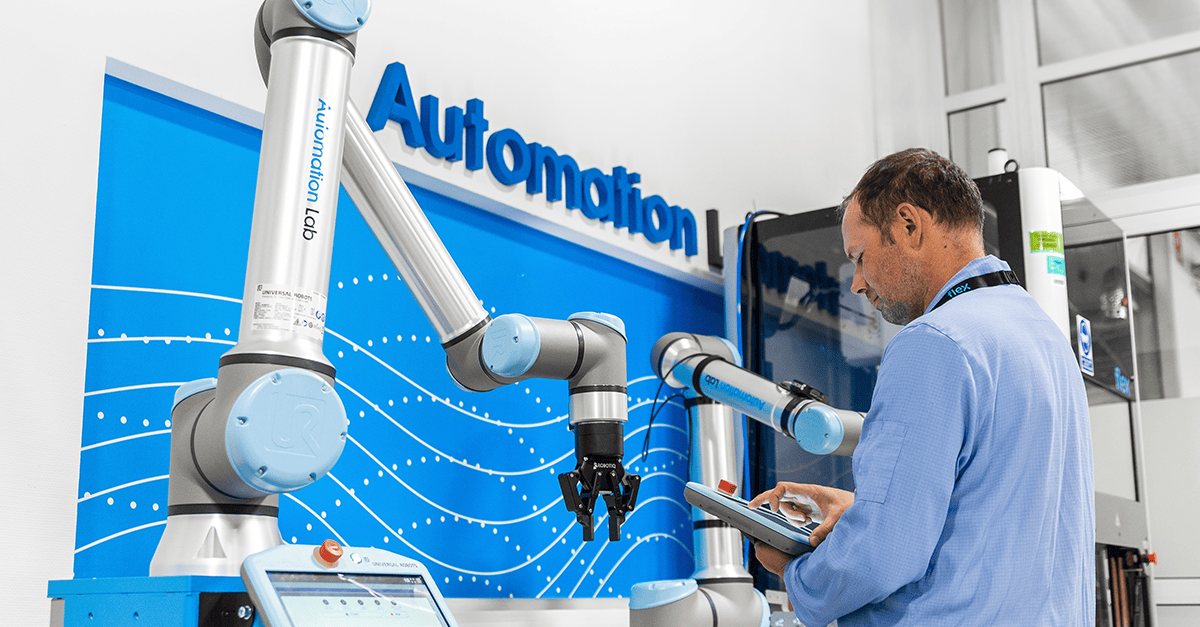
Few organizations experience both sides of the equation every day. Those that do are invaluable. Robotics OEMs need manufacturing partners that understand not only how robots are designed and built, but how they are deployed, integrated, and scaled in real production environments. Flex operates thousands of automation systems across its own red de fabricación global while producing robots for leading OEMs. That combination provides a unique perspective on the challenges manufacturers are trying to solve and the capabilities they expect from robotics partners. In turn, those insights help shape products that are simpler to manufacture, easier to deploy, and better aligned to the realities of modern production.
For robotics OEMs, understanding the manufacturing problem is more than the first step toward successful automation. It informs every business decision that follows, from product strategy and engineering to industrialization and lifecycle support. Companies that embrace that perspective will build stronger products, customer relationships, and competitive positioning.