
Papel blanco
Alimentación de 800 V CC para centros de datos: Acelerar la adopción con lecciones aprendidas de los fabricantes de vehículos eléctricos.
Antes sorprendía que los racks de los centros de datos consumieran 10 kW de potencia, pero ahora, en los diseños de infraestructura de IA de vanguardia, se habla cada vez más de cargas de trabajo de IA de última generación en racks que funcionan a 1 MW o más. Para quienes no estén familiarizados con el tema de la energía, pongamos estas cifras en perspectiva: 10 kW son suficientes para calentar una casa pequeña en invierno, mientras que 1 MW es suficiente para calentar una gran instalación comercial.
Eso es mucha potencia para poner en un espacio de rack/gabinete de 19 o 21 pulgadas, pero centro de datos de clase hiperescala Es más que un simple rack. A medida que la computación de IA consume más energía, también existe la presión de aumentar el factor de utilización del espacio en el centro de datos, instalando la mayor cantidad de servidores posible en un espacio determinado. Tradicionalmente, cada rack ha incluido convertidores CA/CC que distribuyen salidas de 48/54 V a los gabinetes de servidores desde una entrada de CA trifásica. Los sistemas de alto rendimiento también requieren unidades de distribución de energía (PDU) y módulos de respaldo de batería (BBU).
Todo este equipo de alimentación aumenta de tamaño en proporción al consumo de energía, lo que supone una limitación física para integrar más potencia de procesamiento en un rack. Además, las arquitecturas de alimentación tradicionales se acercan a los límites prácticos de eficiencia y densidad para los sistemas de IA de próxima generación. La corriente de salida total se sitúa en decenas de miles de amperios a 48 V a nivel de MW, por lo que si los convertidores CA/CC fueran externos al rack, las pérdidas en las interconexiones prácticas serían inviables y el calentamiento de los conectores/contactos se convertiría en una nueva limitación prácticamente insuperable.
La industria está evaluando cada vez más una nueva generación de arquitecturas de alimentación.
Alimentación de 800 V CC El siguiente paso lógico es la alimentación, pero existen dos caminos distintos para alcanzar ese objetivo. El primero es el enfoque propuesto por NVIDIA, con cables de transmisión de energía que constan de tres conductores: +800 V, neutro y tierra. El segundo es la especificación Mount Diablo del Open Compute Project, con cables de transmisión de energía que añaden un conductor adicional: +400 V, -400 V, neutro y tierra. Ambos enfoques alcanzan el mismo rango de 800 V, pero Mount Diablo opera efectivamente a la mitad del voltaje absoluto del sistema.
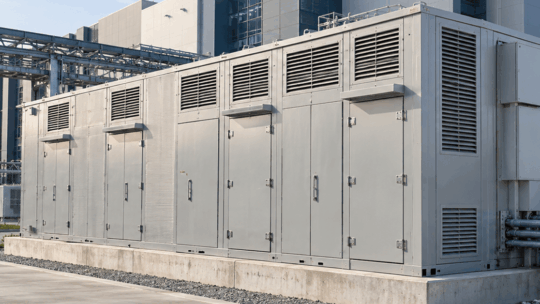
Sin embargo, las diferencias entre ambos enfoques no son ni de lejos tan interesantes como las ventajas que ofrecen en comparación con la arquitectura de alimentación de 48 V actual. Para la misma carga y el mismo tamaño de conductor, el mayor voltaje del sistema implica una reducción de la corriente de aproximadamente 17 veces y una reducción de las pérdidas óhmicas de 17 veces.2 (289) en comparación con los sistemas de 48 V. Esto permite lo que antes era impensable: La etapa de CA/CC, la PDU y las baterías se pueden trasladar a un bastidor auxiliar dedicado..
El portaequipajes con sidecar eléctrico Ahora se puede optimizar su disposición mecánica para lograr la menor pérdida de conversión y distribución interna, así como una refrigeración eficaz. Al mismo tiempo, el rack de computación de TI ahora cuenta con espacio para estantes de procesadores adicionales, conexiones de alimentación más grandes y sistemas avanzados de refrigeración líquida. La mejora tanto de la potencia como de la densidad de procesamiento resuelve una disyuntiva de larga data entre el suministro de energía y la densidad de procesamiento, pero las arquitecturas de 800 VCC ofrecen precisamente eso; solo asegúrese de que su infraestructura pueda soportarlo.
Ahora que los racks de computación de TI reciben 800 VCC, surgen preocupaciones de seguridad con respecto a las interconexiones, como las de la distribución de CA trifásica a 416/480 VCA. Este es un aspecto donde las diferencias entre los dos estándares de 800 VCC se hacen más evidentes.
En el caso del sistema unipolar de 800 VCC de NVIDIA, un lado de la fuente de alimentación estaría conectado a tierra, pero el lado "caliente" necesitará un aislamiento sustancial y distancias de fuga y de separación con respecto a tierra y otros conductores, mayores que con una fuente de alimentación de CA.
Para la distribución bipolar de ±400 V de Mount Diablo, la situación es algo más compleja. Se puede utilizar un esquema de alta resistencia con conexión a tierra en el punto medio (IT), de modo que cada polo se sitúe aproximadamente a la mitad de la tensión polo a polo con respecto a tierra. ETSI señala que esto reduce la tensión a tierra a 50%, pero también implica que ambos conductores están energizados a tierra y deben estar aislados. Esta misma simetría puede mejorar la compatibilidad electromagnética (CEM) y facilitar el filtrado de EMI en modo común (bobinas de choque en modo común). Dado que la topología de conexión equipotencial/retorno establece la impedancia común en la red de tierra, la guía de ETSI destaca que esta es la ruta por donde pueden circular las corrientes de alimentación de CC cuando los sistemas están interconectados, por lo que el esquema de conexión equipotencial/conexión equipotencial afecta significativamente al comportamiento en modo común. En la configuración preferida por ETSI, el terminal de punto medio está conectado al terminal de puesta a tierra principal (MET), que ETSI describe como el punto de puesta a tierra común para el conductor de puesta a tierra de punto medio y de protección (un punto de referencia definido en lugar de una puesta a tierra local del chasis ad hoc).
Se suministran 800 VCC a cada estante dentro del rack de servidores, y el aislamiento es un factor crucial, ya que los requisitos son mucho más exigentes que con 48 V. Esto afecta las especificaciones de los conectores y cables, así como las distancias de fuga y de aislamiento en las placas de circuito impreso y alrededor de las barras colectoras, lo que requiere modificaciones en todo el rack. Una consecuencia es que las etapas de conversión CC/CC descendentes deben aislarse según las normas de seguridad pertinentes, como la evaluación del sistema IEC/UL 62368-1, dependiendo de la arquitectura. Esto contradice la tendencia reciente de eliminar el aislamiento en este punto y significa que todo el rack de servidores tendría que ser evaluado por una agencia de seguridad.
Otro efecto es que los convertidores CC/CC de conversión descendente suelen generar un bus intermedio de salida de 12 V a partir de una entrada de 48 V, regulada o no regulada. Sin embargo, ahora deben operar con la tensión de entrada de CC aumentada o utilizar etapas de entrada en serie para poder emplear dispositivos de conmutación de máxima eficiencia. Los convertidores con estas especificaciones aún no son comunes en los centros de datos, pero es posible que a corto plazo se puedan aprovechar productos similares de los vehículos eléctricos.
Otra consideración clave dentro del rack es que la eliminación del bus de 48 V elimina el punto natural para conectar las baterías de respaldo tradicionales de 48 V, lo que requiere nuevos enfoques para el almacenamiento de energía. Para los sistemas de iones de litio, el cambio a un bus de mayor voltaje es principalmente una cuestión de actualizar la arquitectura del paquete, utilizando más módulos en serie para alcanzar el voltaje de enlace de CC requerido. Si un sistema requiere un funcionamiento continuo de corta duración o ciclos muy frecuentes, el almacenamiento de energía basado en condensadores, como los bancos de supercondensadores, puede ser una buena opción. Por lo general, requieren poco mantenimiento, toleran amplias temperaturas y son capaces de una vida útil muy larga, aunque ofrecen un tiempo de retención más corto porque almacenan menos energía.
Independientemente del método de almacenamiento de energía, la alimentación de 800 V CC simplifica la integración de la generación de energía in situ. El bus de 800 V permite una alineación más directa con diversas arquitecturas de bus de CC para microrredes o energías renovables, que suelen operar en un rango de voltaje similar, lo que simplifica la interfaz.